


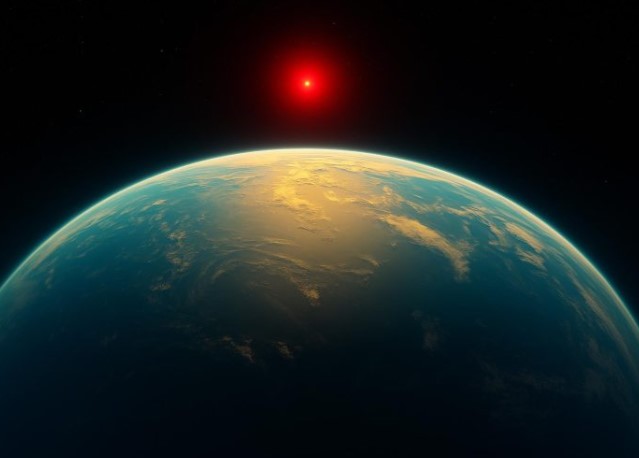
Earth’s habitability may trace back to a precise chemical balance during its formation, one that kept life-critical elements from disappearing into the core or drifting into space.
A world can look promising from afar and still be missing the chemical ingredients that biology depends on. Two of the most critical are phosphorus and nitrogen, and they act like gatekeepers for life. Phosphorus is built into DNA and RNA, the molecules that store and pass along genetic information, and it also helps cells manage energy. Nitrogen is a core ingredient in proteins, which living things rely on to build cells and keep them working.
What makes these elements especially interesting is that a planet can lose access to them long before its surface becomes stable. A study led by Craig Walton, a postdoctoral researcher at the Centre for Origin and Prevalence of Life at ETH Zurich, together with ETH professor Maria Schönbächler, found that phosphorus and nitrogen must be available at the moment a planet forms its core.
“During the formation of a planet’s core, there needs to be exactly the right amount of oxygen present so that phosphorus and nitrogen can remain on the surface of the planet,” explains Walton, lead author of the study.
Earth appears to have hit that chemical balance around 4.6 billion years ago, which may help explain why it ended up with the raw materials life needs. The result could reshape how scientists judge the chances for life elsewhere in the universe.
Core formation as a form of cosmic roulette
Young rocky planets begin as roiling oceans of molten rock. As gravity pulls materials into layers, dense metals such as iron sink inward to form the core, while lighter material remains above to become the mantle and, later, the crust. That physical separation is only half the story. At the same time, chemistry is deciding which elements prefer metal and which prefer rock, and oxygen is one of the biggest drivers of that choice.
If oxygen is scarce during core formation, phosphorus tends to bond with iron and other heavy metals and is dragged down into the core. Once that happens, it is effectively removed from the surface environment where life would need it. If oxygen is too abundant, phosphorus stays in the mantle, but nitrogen becomes more likely to escape into the atmosphere and eventually be lost. In other words, the conditions that protect one life essential element can make the other harder to keep.
Chemical Goldilocks zone
Using extensive computer modeling, Walton and his colleagues found that there is only a very small range of intermediate oxygen conditions under which both phosphorus and nitrogen remain in the mantle in quantities suitable for life. The researchers describe this balance as a chemical Goldilocks zone.
“Our models clearly show that the Earth is precisely within this range. If we had had just a little more or a little less oxygen during core formation, there would not have been enough phosphorus or nitrogen for the development of life,” says Walton.
The study also shows that other planets formed under different conditions. In the case of Mars, oxygen levels during its formation fell outside this narrow zone. As a result, Mars ended up with more phosphorus in its mantle than Earth but significantly less nitrogen, producing an environment that would have been far less favorable for life as we understand it.
New criteria for the search for life
The new findings could change how scientists look for life elsewhere in the universe. Until now, the focus has been predominantly on whether a planet possessed water. According to Walton and Schönbächler, this falls some way short.
The amount of oxygen available during the formation of a planet can mean that many planets are chemically unsuitable for life from the very beginning, even if there is water present and they otherwise appear to have the right conditions for life.
The search for similar solar systems in the universe
These chemical prerequisites for life can be measured indirectly by astronomers by observing other solar systems using large telescopes. The amount of oxygen present in a solar system for the formation of planets depends on the chemical composition of the host star. The star’s chemical structure shapes the entire planetary system around it, as planets are primarily composed of the same material as their host star.
Solar systems that differ significantly from our own in terms of their chemical composition are therefore not good places to look for life elsewhere in the universe. “This makes searching for life on other planets a lot more specific. We should look for solar systems with stars that resemble our own Sun,” says Walton.


comments


Other categories
Recent Comments