


Incident in Haryana — at least six deaths linked to liver ailments — comes amid a pattern of water contamination in different states
Health authorities in Haryana’s Palwal district have declared an emergency in Chayansa village, marking the latest escalation in a series of water and blood-borne disease outbreaks that have claimed lives and affected hundreds across four states over the last few weeks.
This incident in Haryana — over a dozen deaths in about a month, at least six of them linked to liver ailments — comes amid a pattern of infra failures and water contamination, from high-rises in Kolkata, West Bengal, to the planned sectors of Gandhinagar in Gujarat, to "India's cleanest" Indore in Madhya Pradesh. All within the last few weeks.
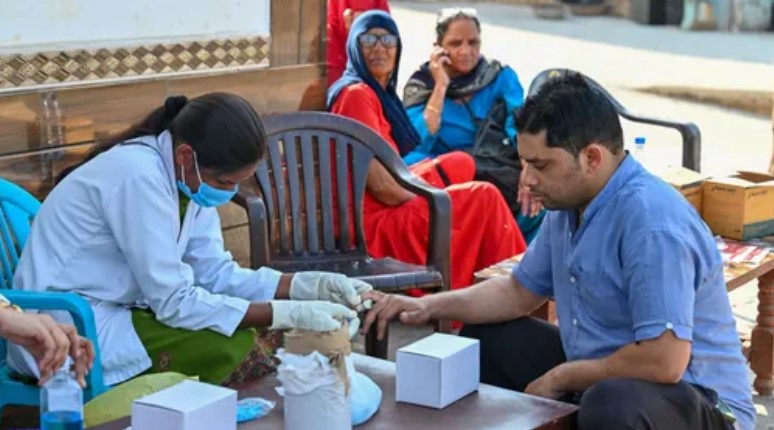
In Palwal's Chayansa village, a rapid response team is currently camping to contain an outbreak that has seen 15 deaths reported between January 6 and February 11. Not all deaths were linked to hepatitis, with several others being reported due to old age, accidents or other conditions.
Preliminary screening, however, indicated that liver-related complications are at the centre of the crisis.
At least six deaths have so far been clinically attributed to liver-related complications, including acute Hepatitis B, jaundice, or liver failure.
Screening of nearly 1,500 residents revealed 37 cases of Hepatitis C, 10 of Hepatitis B, and one case of HIV, officials said.
The source of the infection remains elusive. "Blood samples have tested negative for Hepatitis A and E, which are commonly water-borne," said Dr Devender Jakhad, the health official overseeing the probe, told HT. Given that Hepatitis B and C are usually blood-borne, investigators said they don’t have a clear transmission route.
Authorities are investigating unsafe medical practices, shared barber blades, and injectable drug use, though water contamination has not been officially ruled out.
Mohammad Ismail, the sarpanch of Chayansa village, said, “The village has been living in fear. One after another, 15 people have died… Initially, many people had diarrhoea, and doctors suspected food poisoning or water contamination, but no report confirmed this. Now, we are being told the deaths are due to blood-borne diseases.”
Palwal falls in the Delhi-centred National Capital Region (NCR).
Kolkata: Agitation after 300 taken ill at Shukhobrishti
Simultaneously with this tragedy in the NCR, away in the eastern metropolis a severe diarrhoea outbreak has gripped a housing complex in Kolkata’s New Town area.
More than 300 residents in Shukhobrishti's E-block have fallen ill, with families reporting that almost every household has at least one affected person. On Monday, February 16, agitated residents surrounded the facility manager to demand immediate access to safe drinking water.
Residents claim they had raised repeated complaints about poor water quality, but no action was taken until the sickness became widespread. A written complaint has since been submitted at the local police station.
Infrastructure cracks in cleanest city, planned city
The water-related crisis has appeared in Indore, MP; and Gujarat's capital Gandhinagar, too.Indore, which has held the title of “India's cleanest city” for some years in the government survey under the Swachh Bharat scheme, the Bhagirathpura neighborhood saw mass contamination that occurred after authorities allegedly ignored months of complaints regarding foul-smelling water.
While locals claimed 15 deaths occurred in January, the health department officially confirmed at least four. Among the victims was an infant born after a 10-year wait by a couple to become parents. The child died after consuming milk mixed with municipal water, HT has reported. Clinical tests confirmed that tap water was a medium for a lethal cocktail of E. coli, Salmonella, Vibrio cholerae, viruses, fungi, and protozoa.
Investigations traced the contamination to raw sewage leaking from a toilet at a police chowki that lacked a septic tank, plus multiple breaches in a 30-year-old water pipeline. This allowed untreated human waste to mix with the water supply of nearly 50,000 residents.
MP chief minister Mohan Yadav ordered the removal of the additional commissioner and the superintending engineer in charge of water distribution.
However, the issue has rocked the Madhya Pradesh assembly too. Congress legislators on Tuesday, February 17, staged a protest carrying bottles of dirty water on the premises of the Vidhan Sabha on Tuesday, the second day of the budget session. Leader of Opposition Umang Singhar claimed 35 people died due to contaminated water in the Bhagirathpura area, and accused the government of trying to shirk its responsibility.
The Indore tragedy happened around the same time in January when Gandhinagar — one of India's post-Independence planned cities and the capital of Gujarat — saw a typhoid outbreak caused by dirty water.
Over 130 cases of typhoid were detected, primarily in Sectors 24, 28, and Adivada.
The outbreak was linked to leakages at 20 different spots in water and sewage pipelines, some of which were laid 35 years ago. The increase in water pressure caused weak joints and older pipes to fail, leading to contamination, reports said.
“This outbreak reflects a failure of coordination in underground infrastructure planning. When water lines, sewage and other networks are executed in silos without a unified map and sequencing, contamination risks become inevitable, even in a planned city like Gandhinagar,” said an urban planner associated with Gujarat's public infrastructure projects, unwilling to be named.
Residents reported that roads were repeatedly dug up by different contractors for drainage, gas, and fiber optic lines, leading to a "haphazard" growth that compromised basic utilities.
The National Human Rights Commission also took notice.
The outbreaks underline a broader struggle with water safety in the country. According to the Union Ministry of Jal Shakti’s 2024 report, fewer than a third of the households in Gandhinagar receive potable drinking water through tap connections, well below the national average of 76%. In Gujarat as a whole, only 47.3% of households received quality tap water in 2024.


comments


Other categories
Recent Comments