


Stefan Welker, strategic segment manager for Rigid Packaging at Industrial Physics, explores how packaging manufacturers can gain value from redefining the human role in a technology-driven era.
The role of the human workforce in packaging is changing. From skilled engineers retiring to rising automation across production lines, the packaging industry is evolving considerably. As the balance between human expertise and technology continues to shift, manufacturers are rethinking how people contribute to innovation, efficiency and quality assurance.
Here, we explore the new role of humans in packaging manufacturing and why companies stand to gain lasting value by re-evaluating how their people integrate with smarter systems.
Pressures reshaping the workforce
One of the most significant pressures shaping the workforce is the growing skills shortage. Many experienced packaging professionals with decades of technical expertise are approaching retirement, while fewer younger workers are entering the sector. This generational shift risks the loss of valuable institutional knowledge, prompting renewed urgency around training and skills retention to maintain productivity and quality.
In time, AI-enabled measurement and process control systems could help to compensate for the loss of expertise by linking precise test data with SPC insights, supporting Industry 4.0-style knowledge transfer across production lines. The power of these knowledge tools could be further enhanced as they self-train to reflect the specific conditions of each production line, incorporating both upstream and downstream process steps.
In the present day, sustainability expectations are rising sharply. Regulators and consumers are demanding recyclable, compostable and reusable packaging solutions, requiring manufacturers to master new materials and production techniques. For many professionals, this means acquiring new knowledge and skills, from understanding material science innovations to applying processes for eco-conscious packaging assembly.
Supply chain disruptions and fluctuating material costs are also adding pressure. Variations in the availability of raw materials and costs have complicated production schedules, and workers are under increased scrutiny to maximise resource efficiency, minimise waste and maintain output levels despite constraints. The ability to adapt quickly and problem-solve under these conditions is becoming an essential workforce competency.
Finally, tighter margins across the industry mean that teams are being asked to deliver more with less. This combination of skills gaps, sustainability targets, supply chain volatility and financial pressure makes it clear that a new approach to workforce management is needed.
People as a strategic advantage
While these challenges are significant, they also present opportunities. Forward-thinking manufacturers are reframing their people not as a cost centre but as a strategic asset.
When packaging companies shift their mindset to view their team as drivers of innovation and operational excellence, rather than seeing labour as a cost burden, they unlock untapped potential. With this approach, the workforce becomes a source of creative problem-solving, process optimisation and continuous improvement – not just a pair of hands to complete traditional processes.
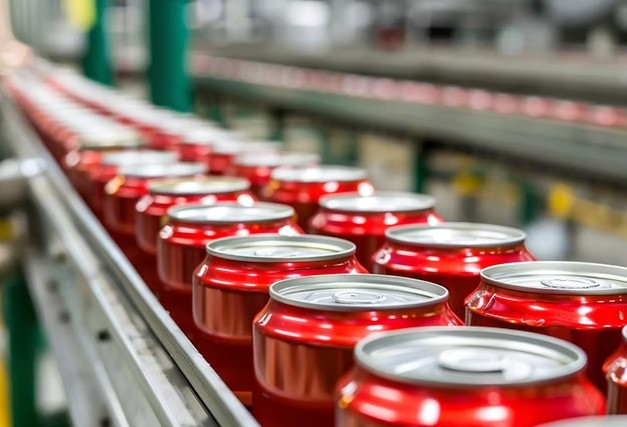
Technology is a crucial enabler of this shift. Automation in test and measurement systems significantly reduces the risk of human error, a key cause of production delays and quality issues. For example, automatic inspection gauge technology in beverage packaging can deliver consistent can-end score measurements across batches, eliminating operator variability and improving product quality.
By automating manual and repetitive processes, these systems also free people to focus on higher-level responsibilities, such as interpreting real-time data, supervising complex workflows and optimising performance.
Instead of manually collecting cans or lids, today’s automation technologies can handle the entire sequence – from automatic sampling on the production line and feeding into the measurement system, to detecting the measurement object and production stage, performing measurements and returning the cans to the line. This level of automation allows employees to redirect their attention to more complex, value-adding tasks. With the right training, workers can evolve into analytical and supervisory roles that directly influence company strategy and efficiency.
Some manufacturers are already responding by introducing structured training programmes that blend mechanical knowledge with data literacy. By equipping operators to interpret statistical process control (SPC) data or troubleshoot sensor readings, these initiatives turn shop-floor staff into proactive contributors to process innovation.
Culture of continuous improvement
Technology alone is not enough. To realise its full value, manufacturers must create a culture that empowers employees to grow alongside automation. But conversely, automation must also evolve with its people. By enabling communication between humans and systems, eg. through shared knowledge databases, automation can provide less experienced employees with instant access to expertise, helping them solve problems efficiently and maximise productivity.
Industrial Physics’ latest research found that almost half (48%) of packaging professionals agreed their company was already investing in futureproofing, reflected in food and beverage packaging through increased adoption of automation. This technology bolsters manufacturers against challenges such as the skills shortage, supply chain turbulence and financial constraints as vital data is collected via tech in an accurate, efficient way, regardless of the external environment.
Automated systems can handle routine inspection and data collection, allowing operators to focus on decision-making and continuous improvement. Meanwhile, automated process control systems facilitate better data integration, shifting maintenance from reactive to proactive. By analysing performance trends, operators can schedule maintenance before breakdowns occur, reducing downtime and improving overall equipment effectiveness (OEE).
When technology supports the workforce effectively, teams can operate in greater synchronisation and at a faster pace. The synergy between human insight and automated data collection facilitates smarter working practices, where continuous feedback loops drive incremental improvements. As digital transformation accelerates, collaboration between production, maintenance and quality teams becomes increasingly seamless, supported by shared access to live process data and performance dashboards.
Making progress
As the packaging industry strives to meet growing demand whilst meeting ambitious sustainability targets, the role of humans remains critical, but transformed.
The workforce today looks less like traditional labour and more like a strategic innovation partner. While technology automates and improves routine tasks, humans bring critical thinking, adaptability and creativity to the production floor.
Manufacturers that recognise and invest in this new human role by fostering upskilling, supporting technological adoption, and building cultures of continuous improvement will be best positioned to thrive in a complex, fast-moving market.
Ultimately, the future of packaging manufacturing will depend on humans and technology working together, harmoniously and strategically, to achieve smarter, more sustainable outcomes.


comments


Other categories
Recent Comments