


For India, which depends heavily on Middle East crude, Strait of Hormuz closure could translate into higher fuel prices and inflationary pressures
As the United States and Israel escalate military operations against Iran, global markets are bracing for the unthinkable: a closure of the Strait of Hormuz, the world’s most critical oil chokepoint. Iran claims that it has already closed the Strait, but it is still not clear if this is a complete closure.For India, which depends heavily on Middle East crude, this could translate into higher fuel prices, inflationary pressures, and economic instability.
What is the Strait of Hormuz?
The Strait of Hormuz lies between Iran and Oman, connecting the Persian Gulf to the Gulf of Oman and the Arabian Sea. At its narrowest, it is just 33 kilometres wide, with shipping lanes barely 3 kilometres wide in each direction.
Despite its size, roughly 20% of the world’s oil and gas supply passes through this corridor daily - about 20–21 million barrels of crude, condensate and fuels. It is also a vital route for liquefied natural gas (LNG), particularly from Qatar.
This makes it one of the most strategically important trade arteries in the world.
Why is it so crucial to global energy markets?
Most oil exports from OPEC producers — Saudi Arabia, Iraq, Kuwait, the UAE and Iran — move through this strait, primarily to Asia. Qatar sends almost all its LNG exports through these waters.
Even the threat of disruption is enough to send prices soaring. Brent crude has already surged sharply amid fears of escalation, with analysts warning that a prolonged closure could push prices beyond $100 per barrel, and in extreme cases to $120–$150.
Oil markets are forward-looking. Traders price in risk. When tankers halt, insurers cancel coverage, and freight rates hit record highs, the impact is immediate, even if the strait is not formally declared “closed.”
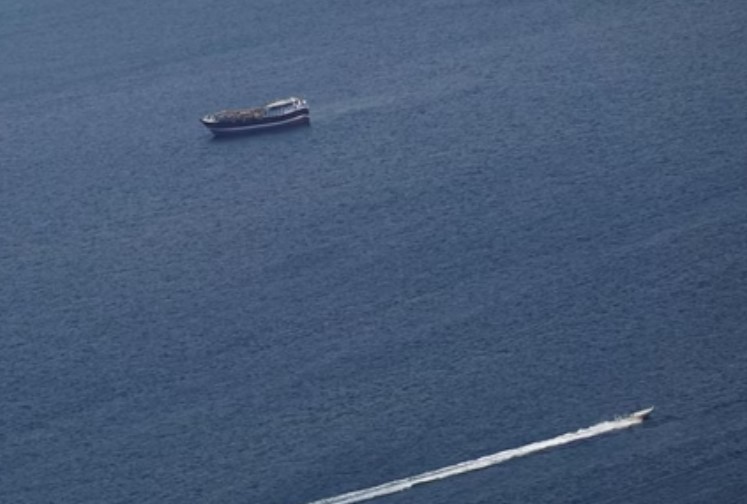
Recent reports indicate that dozens of tankers have dropped anchor outside the Gulf, awaiting clarity, effectively choking flows.
Iran’s leverage and risks
Iran holds the world’s fourth-largest proven oil reserves — around 170 billion barrels — and is a major OPEC producer. Beyond its own exports, its geopolitical weight stems from its location.
Iran has long warned it could shut the strait in retaliation against military aggression. It has capabilities including sea mines, fast attack vessels, submarines, drones and missile systems that could severely disrupt traffic.
However, a full closure would also damage Iran’s own economy, halting its exports and potentially alienating key buyers like China. Analysts say such a move would likely be a “last-resort” option in an all-out war scenario.
Yet even partial disruptions - harassment of ships, detentions, or targeted strikes - could have outsized economic consequences.
Why India is especially vulnerable
India sources around 55% of its crude imports from the Middle East, amounting to roughly 2.7 million barrels per day. Unlike China, which reportedly holds up to six months’ worth of crude in storage, India’s buffer is far thinner.
While the government has stated that total storage capacity could last about 74 days, refining sources suggest effective inventories may cover only 20–25 days under current conditions.
That makes India particularly exposed if shipments through the Strait of Hormuz are significantly curtailed.
The likely impact on India:
- Higher fuel prices: A spike in Brent crude directly raises petrol and diesel costs.
- Inflation pressures: Fuel price hikes ripple through transport, food and manufacturing.
- Widening trade deficit: Costlier imports strain foreign exchange reserves.
- Pressure on government finances: Subsidy burdens may rise if retail prices are cushioned.
- Currency volatility: Higher oil import bills typically weaken the rupee.
India has diversified its oil sources in recent years, increasing purchases from Russia and other suppliers. But Middle East crude remains central to its energy mix. A prolonged disruption would force India to compete globally for alternative barrels — likely at higher prices.
Broader global consequences
Asia buys nearly 90% of Middle Eastern oil exports. Japan and South Korea are heavily dependent too, but they hold much larger strategic reserves — over 200 days of coverage.
Europe and the United States may import less Gulf crude directly, but they would not be immune. Oil is globally priced; instability anywhere raises prices everywhere.
Shipping costs are already soaring. Freight rates for very large crude carriers (VLCCs) have reportedly doubled, while LNG shipping rates have jumped over 40%. Insurance premiums have surged. Major container lines are suspending bookings to Gulf ports.
If the conflict drags on, global supply chains could face renewed turmoil reminiscent of past oil shocks.
A historical flashpoint
The strait has been a pressure point before:
- During the 1980–88 Iran-Iraq War, both sides targeted oil tankers in the so-called “Tanker War.”
- In 2012, Iran threatened to block the strait over sanctions.
- In recent years, tankers have been seized or attacked amid rising tensions.
But a full closure would be unprecedented - and economically explosive.


comments


Other categories
Recent Comments