


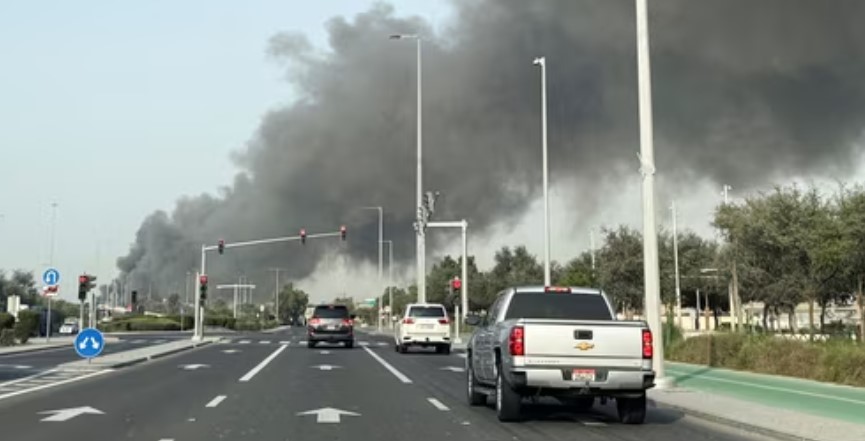
The UAE is reportedly mulling an action to stop Iran's drones. An Emirati official was quoted as saying that the country's “retains its right to self-defence”.
The UAE and many other Gulf nations have been caught in the crosshairs ever since the US and Israel escalated its conflict with Iran, launching an attack in Tehran which also led to the killing of Supreme Leader Ayatollah Ali Khamenei. To counter the US, Iran then launched strikes on its bases in Qatar, Bahrain, Oman and Saudi Arabia, with explosions also reported in Dubai and Abu Dhabi, among others.
With a fresh attack on the US consulate in Dubai, delays and cancellations of flights amid missile attack threats and tourists stranded from multiple countries in the UAE, all eyes have now shifted on whether the Gulf nations would respond to the offensive.
Follow live updates on the situation in Dubai, Abu Dhabi here.
Will UAE strike Iran?
According to an Axios report, the UAE has so far witnessed over 800 projectiles and is also mulling a military action to stop Iran's drones and missiles. Citing two people familiar with the developments, the report said the UAE was considering “defensive meaures” against Iran.
“The view in the UAE is that no country in the world would fail to evaluate its defensive posture under such circumstances,” the source was quoted as saying.
However, the country's international cooperation minister, Reem bint Ebrahim Al Hashimy, recently clarified at a press briefing that the UAE's soil would not be used for any military action against Iran. However, she also asserted the UAE's sovereign right to self defence in accordance with the United Nations Charter and international law, according to a release by the country's Emirates News Agency (EAM).
Damage in Dubai, Abu Dhabi
Iran's missile strikes in the Gulf nations, first reported over the weekend, are still continuing. On Tuesday night, loud explosions were heard across the cities of Doha, Dubai and Abu Dhabi, news agency AFP reported.
Key sites in Dubai and Abu Dhabi suffered damage in the fall out of the full-blown military conflict in the Middle East. Plumes of smoke were seen in Dubai after a missile strike from Iran on March 2, satellite images showed.
According to a UAE defence ministry statement after the Iranian attacks, 165 ballistic missiles, two cruise missiles and 541 drones had been dealt with as Iran launched strikes.
An Indian national was also among foreign workers injured in the strikes, the Indian mission in Abu Dhabi said on Sunday.
Red lines’ crossed by Iran
Arab countries in the Gulf have been fuming over Iran's strikes amid speculation of a likely counter from the UAE, which recently told Tehran to “come back to its senses” and stop hitting countries that aren’t taking part in the US-Israeli assault.
Meanwhile, Qatar condemned Iran's “crossing of all red lines”, adding that all options on retaliation lie with the leadership. “But we have to make it very clear that attacks like these will not go unanswered and cannot go unanswered,” Qatar's foreign ministry spokesman Majed al Ansari was quoted as saying in a BBC report, condemning the attacks on the country's infrastructure and residential areas.Meanwhile, the conflict between the US, Israel and Iran continues, with nearly 2,000 targets in Iran struck by the US in overnight strikes. Explosions were also reported in Tehran and in Lebanon, where Israel said it had retaliated against Hezbollah militants.


comments


Other categories
Recent Comments