


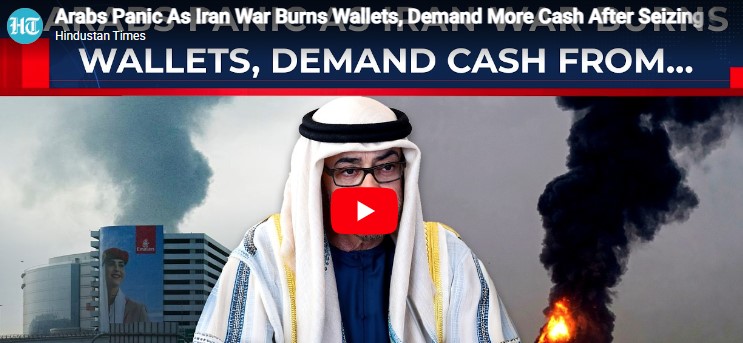
The Gulf nation was actively exploring ways to assume a military role. Such a move would make the UAE the first Persian Gulf country to join the war directly.
The United Arab Emirates (UAE) is willing to join the US-Iran war and is preparing to help the United States and other allies reopen the Strait of Hormuz by force, according to a new report that cited Arab officials. This comes as Iran continues its attacks on the UAE and other Gulf states in response to US-Israeli attacks on its territory.Such a move would make the UAE the first Persian Gulf country to join the conflict directly. This also comes after US President Donald Trump lashed out at allies on Tuesday for not doing more to support the US war effort against Iran, telling them to “go get your own oil” and saying that securing the Strait of Hormuz was not America’s responsibility.
UAE to join US-Iran war?
The United Arab Emirates is now reportedly pushing for a United Nations Security Council (UNSC) resolution to permit such action against Iran, The Wall Street Journal reported, quoting Emirati officials.
Diplomats from the country have also called on the US and military powers in Europe and Asia to come together and form a coalition to reopen the Strait of Hormuz, the report added.
The UAE reportedly believes that countries in Asia and Europe, which are currently hesitant, may participate in efforts to clear the strait if the UN Security Council approves.
Russia and China could block such a resolution. Even if the proposal does not pass, Gulf officials told WSJ that the UAE would still be ready to support the military effort. This could include possible involvement in mine clearance and other forms of support.
The UAE has also reportedly suggested that the US should take control of islands in the Strait of Hormuz, including Abu Musa, which Iran has held for nearly five decades but is claimed by the UAE.
In a statement, the UAE foreign ministry referred to a separate United Nations resolution condemning Iran’s strikes on its cities, along with another resolution by the International Maritime Organization criticising the closure of the Strait of Hormuz.
The ministry said there is “broad global consensus that freedom of navigation in the Strait of Hormuz must be preserved.”
A shift in stance
The UAE’s more assertive stance is a major change in its strategic direction, officials told the media outlet.
Before the war, Emirati diplomats were making efforts to mediate between the US and Iran. This included a visit to Abu Dhabi by Iranian national security official Ali Larijani, who was later killed in an airstrike.
Now, the Gulf nation is aligning itself with Trump’s call for allies to take on a greater share of responsibility in the conflict, especially in efforts to reopen the Strait of Hormuz.
Saudi Arabia and other Gulf nations are also shifting their position against Iran’s leadership and want the conflict to continue until it is weakened or removed, the report said. They have, however, not committed their forces so far.
Bahrain, a close US ally that hosts the US Navy’s Fifth Fleet, is backing the UN resolution, and a vote is expected on Thursday.
How might the UAE help its ally Washington?
Bilal Saab, a fellow at Chatham House and a former Pentagon adviser on the Middle East, told the publication that a decision to join the conflict would publicly show Arab backing for the war. It could also create more operational choices against Iran and help efforts to reopen the Strait of Hormuz.
The UAE has military bases, a deep-water port at Jebel Ali and a location close to the entrance of the Strait of Hormuz. These could serve as key points for a US-led mission, whether to take control of islands or escort commercial tankers through the route.
The country also has a small but capable air force, including US-supplied F-16 fighter jets, which were used in airstrikes in Iraq alongside US forces during the fight against the Islamic State.
Apart from this, the Emirates operates surveillance drones and holds a supply of US-made bombs and short-range missiles, which could help ease shortages faced by US and Israeli forces.


comments


Other categories
Recent Comments