


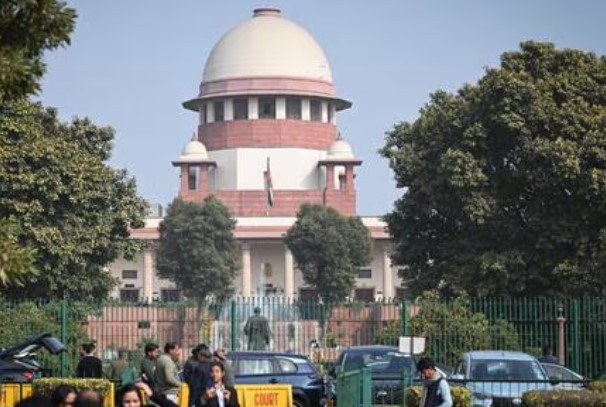
The court made these observations while affirming the life sentence of a man convicted of murdering his wife in Rajasthan in 2011 by setting her ablaze
The Supreme Court has issued a stark reminder that patriarchal control over women’s lives continues to endure, often invisibly, but pervasively, even as India has enacted laws and delivered a series of progressive judgments aimed at securing gender equality.
A bench of justices Sanjay Karol and N Kotiswar Singh said that despite constitutional guarantees and sustained institutional efforts, “patriarchy still permeates the everyday,” raising a troubling question for society at large: Why does control over women’s bodies, choices, and lives persist so deeply?
The court made these observations while affirming the life sentence of a man convicted of murdering his wife in Rajasthan in 2011 by setting her ablaze. It said the incident is rooted in domestic abuse and reflective of the enduring menace of dowry-linked violence.
Situating the case within a broader social context, the bench noted that India, even after over seven decades of independence, continues to grapple with the gap between constitutional ideals and lived realities.
“The Constitution promises equality, non-discrimination on the basis of sex and the right to life and liberty…however, cases such as these demonstrate that even after so many years, rights… are still elusive for many,” the court said in its judgment released on April 4.
It underscored a recurring judicial concern that legal reform, however expansive, has not been sufficient to dismantle entrenched social hierarchies governing gender relations.The bench traced the arc of legislative and judicial interventions aimed at improving the status of women, from the Dowry Prohibition Act, 1961, to protections against domestic violence and workplace harassment. It referenced a series of landmark rulings that expanded women’s rights across domains, from striking down instant triple talaq and the adultery law to recognising women’s equal rights in the armed forces and in inheritance.
Yet, the court noted, these efforts have not fully translated into substantive equality on the ground. “Despite this sustained intervention from different branches of government, empirical data show that all is not well. It presents a sobering picture indeed,” the judgment said.
Backing its concerns with data, the court pointed to the scale of violence women continue to face. More than 448000 crimes against women were recorded in 2023, while dowry-related violence still claims over 6,000 lives annually, it noted, calling these figures a reflection of the “persistence of practices that have long been outlawed.”
Domestic violence complaints, too, remain among the most frequently reported grievances before statutory bodies, highlighting the continuing vulnerability of women within the home, ironically, the space presumed to be safest.
The bench termed it a “paradox” that visible progress coexists with deep-seated inequality. India has seen rising literacy, economic growth, and greater participation of women in education and the workforce. Gender roles, particularly in urban spaces, are evolving. But, the court said, in large parts of the country, especially rural and semi-urban areas, patriarchy remains embedded in daily life.
“Authority within the household is still overwhelmingly male, and women’s autonomy is often conditional and constrained,” noted the bench, adding that even working women continue to bear disproportionate domestic burdens.
The court rejected the tendency to view extreme acts of violence against women as isolated incidents. Instead, it characterised such crimes as manifestations of a deeper structural problem. “Practices such as domestic abuse or even extreme acts like burning a wife…persist not as aberrations, but as indications of a disease-afflicted social order,” the judgment said.Perhaps the most powerful part of the ruling lay in its closing reflection. “After decades of laws, schemes, reforms…why does the control over women’s bodies, choices, and lives still persist so deeply within society?” the court asked. The answer, it said, may ultimately lie not in statutes or courtrooms, but with “We, the People of India.”


comments


Other categories
Recent Comments