


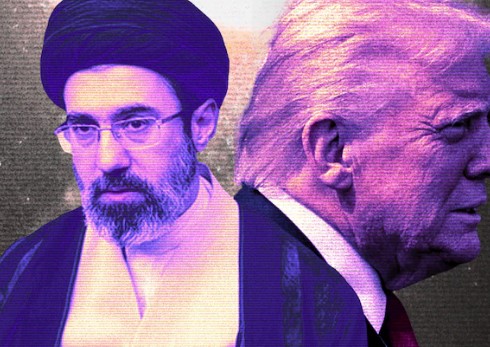
Trump has been inconsistent in his conditions for ending fighting-- regularly backtracking from hardline demands-- but he has maintained that ending Tehran's nuclear program entirely was a key point of entering the war.Tehran:
Iran and the United States have agreed to a tentative, two-week ceasefire in the war that tore across the Middle East over the past five weeks, disrupting the global economy and energy supply. But questions soon emerged over what appeared to be contradicting proposals to halt the fighting, with Iran insisting it would control and charge ships passing through the vital Strait of Hormuz and continue to enrich uranium.
Iran's uranium enrichment demand was not included in Tehran's English-language statement shared by the United Nations, but it was part of the Farsi release circulated by Iranian state media, indicating a possible gap in the communication.
Trump, who initially called Iran's 10-point proposal "workable," soon called it "fraudulent" without elaborating. The American commander in chief insisted Iran's enriched uranium would be "perfectly taken care of" and suggested US warships would be "hangin' around" the narrow waterway through which a fifth of all oil and natural gas passes in peacetime.
What Trump Said
Under Iran's current agreement, many of America's objectives in the war are still in doubt. Iran's enriched uranium disposition -- the foundation of its nuclear weapons programme -- remains unknown. The Islamic Republic also still holds an influence over regional proxies, such as Hezbollah in Lebanon and Houthi rebels in Yemen.
Trump has been inconsistent in his conditions for ending fighting-- regularly backtracking from hardline demands-- but he has maintained that ending Tehran's nuclear program entirely was a key point of entering the war.
Talking to news agency AFP, Trump said Iran's uranium will "be perfectly taken care of, or I wouldn't have settled."
ncluding lifting sanctions and accepting its nuclear enrichment.
In a statement, Iran's Supreme National Security Council said the ceasefire plan would require "continued Iranian control over the Strait of Hormuz", "acceptance of enrichment," and "the lifting of all primary and secondary sanctions." Other key demands in the blueprint, offered through mediators in Pakistan, include US military withdrawal from the Middle East, an end to attacks on Iran and its allies, the release of frozen Iranian assets; and a UN Security Council resolution making any deal binding. Crucially, the plan also calls for expanded Iranian control over the Strait of Hormuz.


comments


Other categories
Recent Comments