


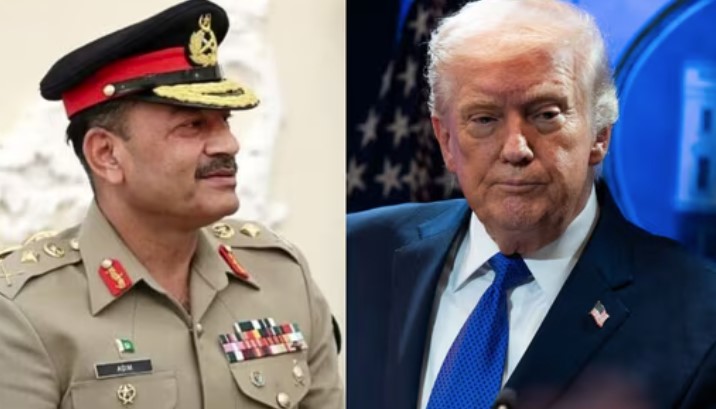
With Donald Trump’s deadline looming, Asim Munir launched a flurry of calls to top US officials, including Trump, JD Vance and Steve Witkoff.
Even as US President Donald Trump publicly escalated his threats against Iran, at one point claiming Tehran was “begging” for a deal, the White House was quietly pushing for a temporary ceasefire, a report in Financial Times said citing people familiar with the talks.
The report suggests that behind the hardline rhetoric, Washington was already exploring a pause in fighting, with a focus on reopening the Strait of Hormuz (key global oil route). Track US-Iran war updates.
The diplomatic push finally culminated late Tuesday night when the US, Iran and Israel announced a two-week ceasefire. The announcement came just hours after Trump warned he could destroy Iran’s “whole civilisation” if his terms were not met.
Trump ‘wanted ceasefire since March’
According to the Financial Times, Trump had been eager for a ceasefire since at least March 21, when he first threatened to “obliterate” Iran’s power plants.
Concerns over rising oil prices and what the report describes as a “resilient” Iranian regime appear to have shaped that urgency, FT reported citing five people familiar with the Pakistan-led back channel.For weeks, the Trump administration leaned on Islamabad to convince Tehran to accept a pause in hostilities. The FT report noted that Pakistan’s position as a “Muslim-majority neighbour” and intermediary made it central to the effort.
The idea was for Pakistan to “sell” the proposal to Iran, positioning itself as a neutral channel while relaying messages between both sides.
At the centre of this back-channel diplomacy was Pakistan’s army chief, Asim Munir, whose efforts, the report notes, intensified as tensions peaked.
Munir’s last-minute outreach
With Trump’s deadline looming, Munir launched a flurry of calls to top US officials, including Trump, Vice-President JD Vance and special envoy Steve Witkoff, the report said.
The US and Pakistan believed Iran would be more receptive if the proposal came via a country that had maintained neutrality during the conflict.
Prime Minister Shehbaz Sharif later made the proposal public reportedly after Munir spoke with Iranian foreign minister Abbas Araghchi.
However, Sharif’s post briefly carried a subject line reading “draft – Pakistan’s PM message on X”. While the slip was later corrected, it fuelled speculation that the ceasefire initiative may not have been solely Islamabad’s.
Back-and-forth proposals
The back-channel saw multiple proposals exchanged — including a US-drafted “15-point proposal” and Iran’s “five- and 10-point” responses.
Pakistan also floated different ceasefire durations, ranging from 45 days to two weeks.
While both sides remained far apart initially, diplomats told the FT that Iran gradually became more open to “diluting” its position, including accepting limits on its uranium stockpile.
Iranian foreign minister Araghchi and other leaders had agreed “in principle” to a ceasefire-for-Hormuz deal days earlier. However, according to the report, they struggled to secure approval from the powerful Islamic Revolutionary Guard Corps (IRGC).
US claims ‘decisive military victory’
As the ceasefire was finalised, the US secretary of war Pete Hegseth claimed Tehran had “begged” for a truce and described the American campaign, “Operation Epic Fury”, as a “decisive military victory.”
“President Trump forged this moment. Iran begged for this ceasefire, and we all know it...Operation Epic Fury was a historic and overwhelming victory on the battlefield...Operation Epic Fury decimated Iran's military and rendered it combat-ineffective for years to come,” he said.
Trump eventually announced the suspension of the US “bombing and attack” campaign, agreeing to a two-week ceasefire following conversations with Sharif and Munir.
“Based on conversations with Prime Minister Shehbaz Sharif and Field Marshal Asim Munir...I agree to suspend the bombing and attack of Iran for a period of two weeks,” Trump said in a post.
Iran, for its part, signalled it would halt military operations if it was not attacked.


comments


Other categories
Recent Comments