


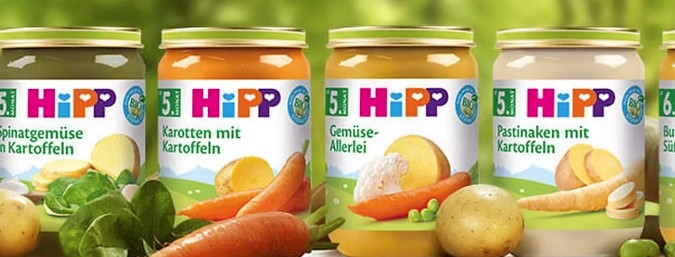
Police in Austria have confirmed that rat poison has been detected in a sample of baby food from brand Hipp due to a suspected criminal interference, following a recall from over 1,000 Spar supermarkets.
In a statement shared on Saturday 18 April 2026, police in Burgenland, eastern Austria, said that a 190g jar of Hipp’s carrot and potato purée was found to contain the poison after appearing to have been tampered with.
A customer had reported the jar, with police confirming that the baby food had not been consumed. Several similar jars were also seized in the Czech Republic and Slovakia.
Initial laboratory tests revealed that the products contained a ‘toxic additive,’ the Burgenland State Criminal Police Office said, noting that the affected jars also had a ‘spoiled odour’. The Federal Criminal Police Office assisted with the investigation and examined a sample of the seized products on Saturday afternoon, which tested positive for rat poison.
The criminal investigation is ongoing, with the authorities requesting increased vigilance and prompt reporting of any suspicious observations. According to the force, suspicious products can be identified by white stickers with a red circle on the bottom of the glass jars, lids already opened or damaged, and missing safety seals with no ‘click’ on opening.
All Spar retailers in Austria have recalled Hipp’s entire baby food jar range, with customers urged not to consume any Hipp jars purchased at Spar, Eurospar, Interspar or Maximarkt due to contamination with potentially life-threatening substances.
Hipp said in a statement that the recall is “not due to any product or quality defect on our part,” and that the products left Hipp’s manufacturing facility “in perfect condition”.
Broader contamination concerns across industry
The news follows widespread recalls of infant formula across multiple brands earlier this year, in multiple countries across Europe, after certain batches were found to contain the toxin cereulide. Produced by the bacterium Bacillus cereus, cereulide is known to cause gastrointestinal symptoms such as nausea and vomiting, and can lead to more severe complications in younger infants.
F&B giants Nestlé and Danone both recalled certain infant formula products across Europe due to the contamination, said to be linked to a third-party ingredient supplier of ARA oil.
Meanwhile, in the US, manufacturer Abbott Laboratories has been at the centre of multiple lawsuits surrounding its cow’s milk-based infant formula product range over the past couple of years.
Earlier this month, a jury in Chicago said that the company must pay $70 million in damages to four families who accused Abbott of failing to disclose that its formula for premature infants could cause the severe bowel disease necrotising enterocolitis (NEC) – claims that Abbott denies. The children, who developed NEC after consuming the formula, live with ongoing health problems according to the lawsuit filings.
In a statement, a spokesperson for Abbott highlighted that on four separate occasions, federal and state courts have dismissed similar lawsuits.
“We appreciate the jury’s time, but we disagree with the verdict and will appeal,” Abbott’s statement said. “Science was ignored in this case. The FDA, NIH, CDC, AAP, NEC Society, neonatologists and other medical professionals all agree: these products are safe, they are necessary and there is no reliable scientific evidence that they cause NEC.”
Abbott said the verdict was “at odds with regulators and the medical community,” adding: “If well-established science and the regulatory framework governing these products are disregarded, it will become extraordinarily difficult for any company to continue providing these medically necessary products in the United States”.
The recent Hipp contamination appears to impact jarred baby food across the Spar distribution channel only, and the brand has reportedly emphasised that baby food sold in other shops – as well as its range of infant formula products – remain unaffected.
Such incidents involving contamination of baby food highlight the need for fast and transparent reaction from brands, manufacturers and retailers, to protect public safety and maintain consumer trust.
With the infant formula and children’s nutrition category already subject to strict regulatory frameworks and intense scrutiny, these recent incidents could lead to the introduction of further measures to prevent not only accidental contamination at the factory level, but potential tampering further along the supply chain.


comments


Other categories
Recent Comments