


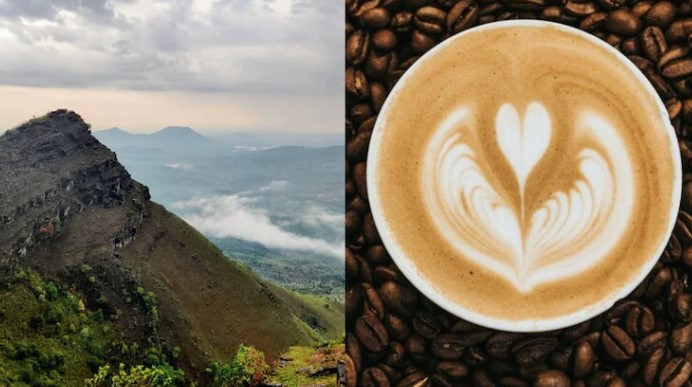
In the 17th century, returning from a pilgrimage to Mecca, Baba Budan is said to have smuggled seven coffee beans from Yemen to India in his beard
India's relationship with coffee is more than agricultural or economic: it's a moment.
From FRIENDS turning café coffee into a cultural phenomenon to morning dashes to the nearest shop for a solid cuppa, everyone has their own coffee story.
Today, as India's coffee market is projected to reach an estimated $17.31 billion by 2034, let's trace how it all began.
The Seven Seeds That Changed Everything
Long before cappuccinos and cold brews, coffee's journey started in the highlands of Ethiopia, travelled through Arabia, and found its way into the cultural bloodstream of Yemen.
By the 15th century, the port of Mocha had become synonymous with coffee trade, fiercely guarded to prevent the spread of fertile beans.ndia, meanwhile, was already a magnet for global trade thanks to its spices. Arab merchants visiting its shores brought with them roasted coffee, which soon intrigued the elite circles of the Mughal Empire.
In fact, accounts from the court of Emperor Jahangir in the early 1600s describe a dark, bitter drink believed to aid digestion and sharpen the mind.
But drinking coffee and growing it were two very different matters.
That changed with a Sufi saint named Baba Budan.
In the 17th century, returning from a pilgrimage to Mecca, Baba Budan is said to have smuggled coffee to India by carrying seven raw beans in his beard from Yemen's Mocha port on his return from Hajj.
Back then, Yemenis exported coffee only in roasted or baked form to prevent others from cultivating it and maintain their monopoly. He chose seven beans due to the sacred significance of the number in Islam.
The plants flourished on nearby hills, later renamed Baba Budan Hills in his honour, his tomb there is an easy day trip from Chikmagalur.
Those seven seeds marked the birth of Indian coffee.
From Sacred Hills To Colonial Enterprise
What began as a sort of spiritual act soon attracted commercial interest. European powers, always alert to profitable crops, took notice.
The Dutch were among the first to recognise the potential. Through the Dutch East India Company, they encouraged cultivation and initiated early exports of Indian-grown coffee.
However, it was the British who would fundamentally reshape the industry.
By the early 19th century, British planters began establishing large-scale coffee estates across southern India. Regions like Wayanad in Kerala, the Nilgiris in Tamil Nadu, and the hills of Karnataka became hubs of plantation activity. Coffee was a commodity now.
The British influence extended beyond cultivation. Botanists studied the plant, trade routes expanded, and Indian coffee began its long journey to European markets, often taking months by sea. During these voyages, something unusual happened.
The beans changed.
Exposed to monsoon winds and humidity, they absorbed moisture, swelling and developing a unique flavour profile. What began as an accident evolved into a method. Today, this process is known as "monsooning", producing the famed Monsooned Malabar coffee, prized for its mellow, earthy character.
Crisis, Adaptation And The Rise Of Robusta
The growth of coffee in India was not without setbacks. By the late 19th century, a devastating fungal disease known as coffee rust began to wipe out Arabica plantations across Asia. India was hit hard.
The solution came in the form of a hardier species: Robusta.
More resistant to disease and better suited to India's humid climate, Robusta gradually replaced large swathes of Arabica cultivation. Today, it accounts for over 60 per cent of India's coffee production, although Arabica remains prized for its nuanced flavours.
Shaped By Shade
Unlike many coffee-producing nations, India developed a distinctive cultivation method: shade-grown coffee.
Coffee plants here are rarely exposed to direct sunlight. Instead, they grow beneath a canopy of trees, often intercropped with spices like cardamom, pepper, and nutmeg. This approach does more than protect the plants. It slows down the ripening process, allowing sugars to develop more fully, resulting in a smoother, more balanced cup.
It also creates something remarkable: coffee farms that resemble forests.
These shaded plantations, particularly in the Western Ghats, support extraordinary biodiversity. Birds, insects, and even endangered species thrive in these environments, making Indian coffee one of the most ecologically integrated in the world.
The Small Growers Behind A Big Industry
Despite its global reputation, Indian coffee is largely produced by small farmers. Around 2,50,000 growers are involved, and nearly 98 per cent of them operate on small holdings.
Karnataka leads production with around 71 percent, followed by Kerala and Tamil Nadu. The hills of Kodagu alone contribute roughly a third of the country's output.
Interestingly, about 70 to 80 per cent of Indian coffee is exported, with major markets including Italy, Germany, and Russia. Yet domestic consumption has been steadily rising, driven by changing lifestyles and a growing café culture.
The Coffee Act
The modern structure of India's coffee industry owes much to policy decisions.
In 1942, the government established the Coffee Board of India under the Coffee Act. This body regulated exports, supported growers, and ensured quality control. However, strict controls also limited incentives for quality improvement.
Everything changed in the 1990s.
Economic liberalisation allowed farmers greater freedom to sell their produce, both domestically and internationally. This shift unleashed new energy into the sector, encouraging innovation, competition, and growth.
Over the past five decades, coffee production in India has grown by more than 15 per cent, with significant expansion in both traditional and non-traditional regions, including the North-East.
The Modern Boom
Fast forward to today, and India's coffee story has entered a new chapter.
The branded café sector has expanded rapidly, growing by 12.7 per cent in a single year to over 5,300 outlets. Chains like Cafe Coffee Day, Barista, Tata Starbucks, and Third Wave Coffee have transformed how urban India consumes coffee.
At the same time, a new wave of artisanal brands such as Blue Tokai and Sleepy Owl are redefining quality and freshness, bringing estate-specific beans to home brewers.
Meanwhile, legacy giants like Nescafé and Bru continue to dominate mass consumption with affordability and reach.
This coexistence of tradition and innovation is what makes India's coffee culture uniquely layered.
Today, India's coffee market is valued at around USD 9.53 billion. Premiumisation, café culture, and home brewing trends are reshaping how Indians engage with coffee.


comments


Other categories
Recent Comments