


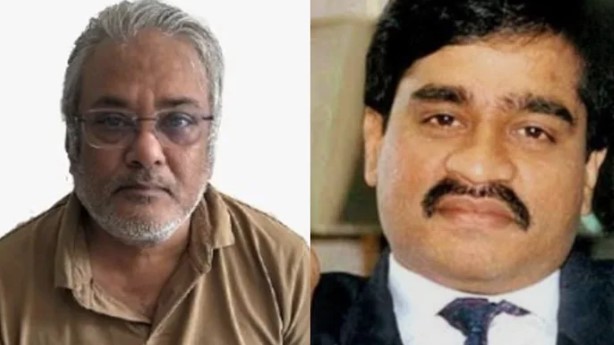
Salim Dola, an alleged associate of Iqbal Mirchi and linked to networks of Dawood Ibrahim, had been on the radar of Indian agencies for years.Ankara:
In a significant demonstration of growing strategic convergence, India and Turkey have reinforced their security partnership through the swift deportation of fugitive narcotics trafficker Salim Ismailbhai Dola, underscoring robust counterterrorism and law enforcement cooperation even amid shifting geopolitical alignments in the Middle East.
Dola, a Mumbai-based criminal with long-standing links to international drug syndicates, was deported to India on April 28 with active assistance from Turkish authorities. His return marks a notable success for Indian agencies pursuing transnational criminals and reflects Ankara's continued willingness to collaborate closely with New Delhi on sensitive security matters.
The development is particularly striking given Turkey's parallel political engagement with countries that have historically taken positions contrary to India's interests, including its well-known diplomatic closeness with Pakistan. Despite this, the Dola case highlights a pragmatic and compartmentalised approach in India--Turkey relations, where security cooperation remains insulated from broader geopolitical complexities.
Dola, an alleged associate of Iqbal Mirchi and linked to networks of Dawood Ibrahim, had been on the radar of Indian agencies for years. He is a prime accused in a Rs 1,000 crore fentanyl seizure case in Mumbai dating back to 2018, involving narcotics intended for trafficking to Mexico. Despite multiple arrests in India, Dola had managed to secure bail or acquittals before fleeing the country in 2020.
After relocating to Dubai in the United Arab Emirates (UAE), he continued to operate his narcotics network using family members. In 2024, he moved to Turkey, entering via Istanbul Airport and attempting to secure Turkish citizenship through the country's investment-linked naturalisation programme. However, his plans were thwarted after the issuance of an Interpol Red Notice at India's request and subsequent intelligence sharing between the two governments.
Turkish authorities acted decisively, blocking his citizenship application and initiating deportation proceedings. The move followed earlier cooperation when Ankara had requested India to provide formal extradition documentation through diplomatic and Interpol channels.
Officials view this episode as part of a broader pattern of collaboration. Turkey has previously assisted India in deporting individuals linked to extremist networks, including suspected operatives associated with ISIS. In 2019, Indian national Mishaal Kunhimon, believed to have connections with the Indian Mujahideen and radical elements in Syria and Iraq, was deported from Turkey with support from Indian diplomatic missions.
The timing of Dola's deportation also aligns with India's intensified diplomatic outreach across the Middle East, where New Delhi has been strengthening ties with multiple regional actors while navigating a complex security environment marked by ongoing conflicts and shifting alliances. India's strategic push has emphasised counterterrorism cooperation, intelligence sharing, and disruption of global criminal networks.
Analysts suggest that Turkey's actions signal a recognition of shared threats posed by transnational crime and terrorism, which transcend bilateral political differences. "Security cooperation is often driven by mutual interests rather than ideological alignment," a senior official noted, pointing to the practical benefits of coordinated enforcement efforts.
As India continues to expand its diplomatic footprint in the region, the Dola case stands out as a clear example of how operational collaboration can yield tangible results. It also reinforces the message that fugitives attempting to exploit international mobility and legal loopholes will face increasing challenges in evading justice.
In an era defined by complex geopolitical equations, the India-Turkey partnership in security matters appears not only resilient but also steadily evolving--grounded in shared priorities of stability, law enforcement, and countering illicit networks that operate beyond borders.


comments


Other categories
Recent Comments