


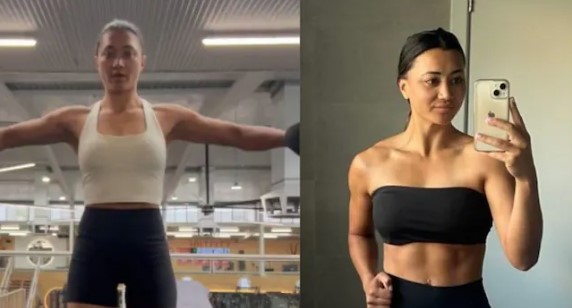
An Australian fitness coach shares how she lost body fat without restricting calories, instead focusing on eating more vegetables, protein, healthy fats, and complex carbohydrates
Weight loss is often associated with eating less and cutting calories, but it might not work the same way for everyone. The way one's body responds to food intake, metabolism, and hormonal balance can influence results just as much as calorie reduction itself. Overly aggressive dieting can backfire and make long-term fat loss harder to sustain. The solution is exploring more balanced approaches that focus on nourishment rather than extreme restriction.
Fitness coach Hannah Button from Australia shares her weight loss journey, which she achieved by eating more than usual. In a post shared on X, she explains the science behind sustainable fat loss. Hannah writes, "For years, I was told the answer was restriction. Eat less. Cut carbs. Count every calorie. I was a professional athlete. I tried it. I lost muscle, tanked my hormones, and looked worse. The advice wasn't just wrong. It was damaging." Here's what 1,200 calories actually does to your body
Your metabolism downshifts to conserve energy. Fat gets preserved, muscle gets burned, you're exhausted, and the scale refuses to move. That's when the self-blame starts. The truth? You weren't the problem - the method was.
1. Protein Is The Game-Changer
The fitness coach suggests aiming for 0.7–1g per lb of bodyweight daily. Your body burns 30% of calories from protein just by digesting it. It protects lean muscle while you drop fat. Most people eat half of what they actually need.
2. Eating More Keeps Your Metabolism Working
Severe restriction signals starvation, which results in cortisol spikes, and your body starts storing fat aggressively. A 300-400 calorie deficit beats aggressive cuts every time. According to Hannah, you should go for a sustainable diet rather than a severe one.
3. Muscle Is Your Fat Loss Engine
The more muscle you gain, the higher your resting metabolism gets. You start burning more fat even at rest. To build muscle, you have to start eating enough and train with intent. Starvation destroys your muscle, which means slower metabolism and more fat stored.
4. Hormones Matter Especially Over 40
When you chronically under-eat, your cortisol levels rise, pushing your body to store more fat. Meanwhile, consistently low calories suppress leptin, the hormone that signals fullness, leaving you with relentless hunger that sets you up for binge episodes.
5. Food You Should Eat
Hannah recommends eating more lean protein like chicken, fish, eggs, and Greek yoghurt. Vegetables for maximum volume and minimal calories. Complex carbs timed around your training and healthy fats in controlled portions.
The Results
Hannah shared that once she moved from restriction to optimisation, the changes were undeniable. Her stubborn body fat finally came off, her strength reached new levels, and her energy and performance rebounded. She now eats more than she did when she was at her leanest, yet she looks and feels better than ever.
"The 1,200-calorie model was designed for sedentary people in the 1960s. You are a high performer. You need a nutrition framework built for performance — not punishment. Simple. Effective. That's what actually works. Once you nail it, the results come," she concludes.


comments


Other categories
Recent Comments