


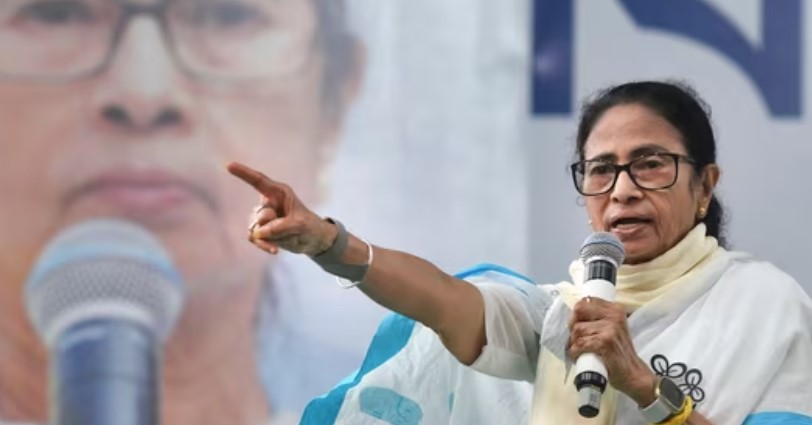
West Bengal election result: Voters have not just voted against candidates, they have rejected the leadership core of the All India Trinamool Congress.
In a dramatic political setback for the All India Trinamool Congress (TMC), the 2026 West Bengal Assembly election results have delivered a sweeping blow to the party’s leadership, with a majority of its ministers losing their seats — including chief minister Mamata Banerjee.
Out of 35 ministers who contested the polls, as many as 22 were defeated, marking a striking 63% loss rate within the cabinet. The scale of the defeats points to what observers describe as a structural rejection of the ruling leadership by voters across the state.
Full list of 22 TMC ministers who lost
Mamata Banerjee — chief minister — Bhabanipur
Aroop Biswas — minister for housing, power — Tollygunge
Bratya Basu — minister for higher education, school education — Dum Dum
Chandrima Bhattacharya — minister for environment, finance, programme monitoring — Dum Dum Uttar
Shashi Panja — minister for industry, commerce & enterprises; women & child development and social welfare — Shyampukur
Sujit Bose — minister for fire and emergency services — Bidhannagar
Indranil Sen — minister for technical education, training & skill development; tourism — Chandannagar
Becharam Manna — minister for agricultural marketing — Singur
Swapan Debnath — minister for animal resources development — Purbasthali Dakshin
Bulu Chik Baraik — minister for backward classes welfare, tribal development — Mal
Pradip Kr. Mazumdar — minister for co-operation, panchayats & rural development — Durgapur Purba
Birbaha Hansda — minister for forests, self help group & self employment — Binpur
Manas Ranjan Bhunia — minister for irrigation & waterways, water resources investigation & development — Sabang
Moloy Ghatak — minister for labour — Asansol Uttar
Siddiqullah Choudhury — minister for mass education extension and library services — Monteswar
Udayan Guha — minister for north bengal development — Dinhata
Sandhyarani Tudu — minister for paschimanchal unnayan affairs — Manbazar
Bankim Chandra Hazra — minister for sundarban affairs — Sagar
Ujjal Biswas — minister for science & technology and bio-technology — Krishnanagar Dakshin
Snehasis Chakraborty — minister for transport — Jangipara
Srikant Mahato — minister of state for consumer affairs — Salboni
Satyajit Barman — minister of state for school education — Hemtabad
The losses cut across key governance sectors. Ministers overseeing crucial portfolios such as industry, education, housing, power, transport, women and child development, and backward classes welfare all failed to retain their constituencies. This broad-based electoral setback signals dissatisfaction not just with individual candidates, but with the government’s overall performance.
Among the most high-profile defeats was that of Mamata Banerjee herself, who lost from Bhabanipur. Senior leaders including Aroop Biswas (Tollygunge), Bratya Basu (Dum Dum), Chandrima Bhattacharya (Dum Dum Uttar), and Shashi Panja (Shyampukur) were also unseated.
Several defeats came with substantial margins. Shashi Panja, the minister for industry and women and child development, lost Shyampukur to BJP’s Purnima Chakraborty by over 14,600 votes. Former minister Nirmal Majhi was defeated in Goghat by BJP’s Prasanta Digar with a margin exceeding 49,500 votes.
North Bengal Development minister Udayan Guha lost Dinhata by more than 17,400 votes to BJP’s Ajay Ray. Siddiqullah Choudhury, a senior TMC leader and a prominent minority face, was defeated in Monteswar by BJP’s Saikat Panja by over 14,700 votes.
West Bengal’s co-operation minister Pradip Majumdar lost the Durgapur Purba seat by a margin of over 30,900 votes against BJP’s Chandra Sekhar Banerjee, while environment minister Chandrima Bhattacharya was defeated in Dum Dum Uttar by BJP’s Sourav Sikdar by more than 26,400 votes.
The scale and spread of these defeats suggest a decisive shift in voter sentiment in West Bengal. Rather than isolated anti-incumbency against individual leaders, the results indicate a broader rejection of the TMC’s governing framework and its top leadership.
With a significant portion of its cabinet wiped out electorally, the TMC now faces a major challenge in rebuilding its political credibility and leadership structure in the state.


comments


Other categories
Recent Comments