


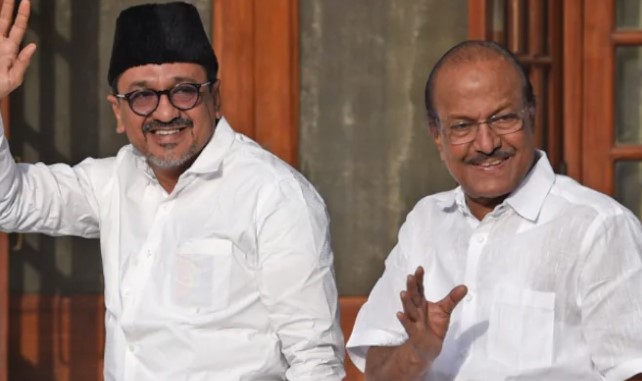
Kerala counted its 2026 assembly votes on Monday, with the Congress-led United Democratic Front (UDF) sweeping back to power and the IUML winning 22 of the 27 seats it contested.Thiruvananthapuram:
In February 1957, two days before Kerala went to the polls, Jawaharlal Nehru, the-then Prime Minister, stood at Kozhikode and delivered his verdict on the Indian Union Muslim League. The speech is preserved in the selected works of Jawaharlal Nehru, Volume 37, archived from All India Radio tapes at the Nehru Memorial Museum and Library. Its title was "Equal Opportunities for All."
"We attained freedom," Nehru told the Kozhikode crowd, "and the Muslim League then departed and went off to Pakistan. But surprisingly, it has left a little bit of its tail in Malabar."
He was not finished. The lone IUML Member of Parliament, B Pocker Sahib, was dismissed as "an odd singular person, lost in the Parliament House because he is isolated from everybody else." The Praja Socialist Party's electoral alliance with the IUML was "a strange marriage of socialism with communalism, and out of such strange marriages there can only be illegitimate offsprings." The League itself, Nehru told the Muslims of Malabar to their faces, "is just ploughing the sand."
Weeks later, after the Kerala election results, Nehru went further. Addressing the AICC General Body, he gave the IUML's parent organisation its historical epitaph: "This malady was given birth to by the Muslim League in the old days."
Communalism in Indian politics, the Prime Minister said, had a single point of origin. He named the party.
Nehru, it is widely reported, even termed the Muslim League a "dead horse".
A young League leader named CH Mohammed Koya, then rising through the ranks, gave the only reply the moment allowed. "The Muslim League is a sleeping lion," he said. "Its roar is about to be heard in this subcontinent."
60 years later, Kerala counted its assembly votes and the Congress-led United Democratic Front (UDF) swept back to power, with the ally IUML winning 22 of the 27 seats it contested.
How IUML Was Written Off
This is the story of how a party born in partition's wreckage, abandoned by Mohammad Ali Jinnah, rejected by Nehru, and written off by everyone, built the most durable political machine in Kerala's history. And how an Islamic scholarly body founded to fight a theological argument became the engine underneath it.
To understand March 10, 1948, the foundation day of League, one has to understand December 1947.
In Karachi, at the final council session of the All India Muslim League, Jinnah addressed the Indian Muslim members before departing for his new country, Pakistan.
Mohamed Raza Khan, a prominent Leaguer from Madras, now Chennai, who was in that room, recorded what happened in his 1969 memoir "What Price Freedom". The constitutional historian AG Noorani later cited Khan's account in "Criterion Quarterly" (2008) to make a point that cuts to the heart of the IUML's origin: Jinnah and his colleagues did not, in that final session, prioritise the interests of the 40 million Muslims they were leaving behind in India. Pakistan's interests came first.
Muhammad Ismail walked out of Karachi as the elected convenor of the Indian segment. He carried no strategic vision from Jinnah, no financial support, and no roadmap. Just a broken organisation, a name, and a community in trauma.
He also left the money behind. The All India Muslim League had Rs 40 lakh in Habib Bank, Karachi.
Ismail reportedly declined his share of Rs 17 lakh. That one act said everything: the new party would not be funded, directed, or beholden to Pakistan.
On March 10, 1948, at Rajaji Hall in Chennai, Ismail and his colleagues did what Jinnah had failed to do for them. They chose India.
They renamed themselves the Indian Union Muslim League. They rejected the two-nation theory. They adopted a new constitution in 1951 and declared that Indian Muslims belonged to India, not to any global Islamic project. What they could not do was change the name enough. "Muslim League" carried Partition's stench. It would follow them for decades.
The Organisation That Was Already Ready
While the IUML was navigating its political birth, another institution had been quietly building the infrastructure of Muslim community life in Kerala for 22 years.
The Samastha Kerala Jamiyyathul Ulama was founded on June 26, 1926, at Kozhikode Town Hall, under the leadership of Pangil Ahmad Kutty Musliyar, with Varakkal Mullakoya Thangal's blessing. It was born as a defensive reaction, not an expansionary one. The target was the Salafi and reformist movement, specifically Vakkom Moulavi's Kerala Muslim Aikya Sangam, which was pushing to strip what it called superstitions from Islamic practice. To the traditionalist Sunni scholars of Malabar, this was an attack on the Shafi'i way of life that Kerala Muslims had maintained for centuries.
Between 1927 and 1944, it convened 15 annual conferences at different locations, drawing thousands. They organised debates where traditionalist scholars publicly defended practices, saint veneration, and classical Islamic jurisprudence.
In December 1929, Samastha published its first periodical, Al-Bayan, in Arabi-Malayalam script. In 1934, it got formally registered. In 1945, at the 16th conference in Karyavattam, it began keeping systematic records for the first time.
The decisive institutional move came on March 25, 1951, with the establishment of the Samastha Kerala Islam Matha Vidyabhyasa Board. Its goal was simple: a madrasa in every Mahall, every mosque community across Malabar. At its first meeting, the Board recognised seven madrasas. Today that number has crossed 11,000.
Those 11,000 madrasas were weekly touchpoints between Samastha's theological authority and every Mappila family in Malabar. The child who attends madrasa on Friday evening grows up knowing that Samastha speaks for Islam in Kerala. And Samastha, when it matters, speaks for the IUML.
That alignment happened because of one family.
The Lonely Years
Back in 1948, the IUML had none of this leverage yet. What it had was a hostile establishment and a name that made everyone nervous.
Nehru had already moved before the party was even properly formed. He asked Lord Mountbatten, then Governor General of India, to personally advise Muhammad Ismail to abandon the idea. He was of the view that Indian Muslims no longer needed a religion-based party andthat the Congress could absorb them. When Ismail ignored the advice, Nehru's government placed the League under strict watch.
The Congress rejected IUML's proposals for electoral alliance before the 1952 elections on three grounds that were never stated plainly but were obvious to everyone involved.
The name was radioactive. Embracing a party called the Muslim League was embracing partition's most visible symbol. No Co
ngress won a landslide in 1952. The IUML had seats in Malabar but nothing Congress urgently needed. B Pocker Sahib won from the Malappuram constituency in 1952, the IUML's first Member of Parliament. He sat alone.
The most dignified figure of this entire lonely period was KM Seethi Sahib. Historian Robin Jeffrey described him as "the leading Mappila intellectual of the generation." He spent the 1950s building the League's credibility quietly, as Secretary of the Kerala unit. After the 1960 election, when Congress again refused ministerial berths despite the IUML's role in the Liberation Struggle against the Communists, a consolation was found. Seethi Sahib was made Speaker of the Kerala Assembly under the Pattom Thanu Pillai ministry.
He died in that chair on April 17, 1961, with constitutional dignity but without executive power. The League had given him a role and the role had given him nothing he deserved.
On his death, CH Mohammed Koya, at 33 the youngest Presiding Officer in Kerala's history, became Speaker. The baton passed to a man who would eventually take it all the way.
The Pivot
By 1967, the League had run out of patience with Congress. They had helped pull down a Communist government in 1959, celebrated a joint victory in 1960, and been denied a single cabinet seat. The reward for loyalty was nothing.
So they did the thing that makes Kerala politics perpetually fascinating. They joined the Communists.
The seven-party United Front led by EMS Namboodiripad, a committed Marxist, gave the IUML two cabinet seats. Into one of them went CH Mohammed Koya as Education Minister. The son of a religious scholar in Atholi, Kozhikode District, Koya had risen from the editorial staff of Chandrika newspaper to become what scholar RE Miller called "the grassroots star of the Mappila community." He was the man who had answered Nehru's dead horse jibe with the sleeping lion line. Now he had a ministry.
What Koya did with it matters. He established scholarships for Muslim and Nadar girls at upper primary and high school levels, at a time when Mappila families routinely kept daughters at home. Historians credit this as a foundational act in Kerala's achievement of gender parity in literacy. He championed the University of Calicut, a demand Congress had ignored for two decades. He built things.
And then, with EMS's backing, he built something else entirely.
On May 5, 1969, the cabinet sub-committee comprising EMS, Revenue Minister KR Gouri, and Education Minister Koya approved the formation of a new district. On June 16, 1969, Malappuram came into existence.
The District Carved from Kozhikode and Palakkad districts, Malappuram comprised four taluks: Ernad, Perinthalmanna, Tirur, and Ponnani. All Muslim-majority. All in the heart of the zones that had seen the worst violence of the 1921 Moplah rebellion, 48 years earlier.
The League said it was administrative justice for a backward region. The Communists said it was development. Both were partly right.
The Jana Sangh opposed the idea.
Jana Sangh leaders, including Bhairon Singh Shekhawat, Madanlal Khurana, and Major General (Retd.) Gurubachan Singh, came to Kozhikode, staged satyagrahas, and courted arrest. They published a 17-page pamphlet titled "Malappuram or Moplastan?" The Jana Sangh's 14th annual session, held in Kozhikode in 1967, had already passed a formal resolution to fight the district's formation on the streets. K. Kelappan, the veteran Gandhi follower known as Kerala's Gandhi, led an anti-district committee alongside the Jana Sangh. He alleged in a speech at a Palakkad satyagraha that the Muslim fishermen community already had trade relations with Pakistan and that once the district was formed, all official posts would pass to Mappilas.
Their core charge was geographic and historical: the taluks chosen for Malappuram were exactly the zones of the 1921 rebellion. Creating an administrative unit on religious demography, they argued, was separatism dressed in government paperwork. They called it "the illegitimate child of the Two Nation Theory."
Interestingly, Congress did not oppose the formation. They were content to let the CPM take the heat while the IUML took the prize. However contentious it was, Malappuram today has universities, hospitals, and development infrastructure that would not exist otherwise. It is also the IUML's fortress, a Muslim-majority district whose administrative identity has given the party a base from which it has dominated local elections for 56 consecutive years. Few parties anywhere in India have as direct and permanent a structural relationship with a single district. The IUML had its district. Samastha had its 11,000 madrasas. The machine was almost complete.
The Panakkad Connection
The final piece was a family. The Panakkad Thangals are Sayyids, direct descendants of the Prophet. Their dargah in Malappuram has drawn pilgrims from across Malabar for generations. Spiritual authority of this kind is not earned through argument. It is inherited, and it is absolute.
Panakkad Syed Mohammed Ali Shihab Thangal became the president of the IUML in the 1970s and held the position until his death in 2009. He was simultaneously the foremost religious authority among Kerala's Sunni Muslims, the community that Samastha represented. One man straddled both institutions. When Samastha spoke, its followers heard Thangal. When Thangal called for IUML votes, they were hearing Samastha. The two organisations shared leadership, a geography, a theology, and an electoral interest.
The result was the most reliable voting bloc in Kerala.
In 1976, the League moved back into the Congress orbit. By 1980, it was a founding member of the United Democratic Front, the coalition that has traded power with the Left ever since. In 1979, CH Mohammed Koya became Chief Minister, the first Muslim ever to hold that office in Kerala, and still the only one. He lasted 50 days before the coalition collapsed as Kerala Congress Mani group and Congress group led by AK Antony withdrew. But. In his brief tenure, he declared Sri Krishna Jayanti a public holiday. Even the Jana Sangh leader KG Marar praised it.
Koya died on September 28, 1983. He was 56. The proof of concept he left behind was this: a Mappila Muslim, from the Muslim League, could govern Kerala's most literate state with dignity and inclusivity. The lesson the party drew was that constitutional politics, not communal mobilisation, was the path to power.
They kept building. The theological base had a split during this time as well.
Samastha functioned as the unquestioned theological authority among Kerala's traditional Sunni Muslims. Then, in 1989, it split.
The divide produced two factions that Kerala still refers to simply by initials: the EK group and the AP group.
The EK faction was identified with E.K. Aboobacker Musliyar. The AP faction rallied behind Kanthapuram A.P. Aboobacker Musliyar. The disagreement was officially organisational, but politics quickly entered the picture. Over time, the split hardened into two distinct power centres inside Kerala's Sunni Muslim community. The AP faction under Kanthapuram gradually developed a more workable relationship with the CPI(M)-led Left Democratic Front.
The Indian Union Muslim League has long occupied an uneasy space between conservatism and restraint.
In 1986, when Shah Bano won her right to maintenance at the Supreme Court, the IUML was part of the conservative Muslim coalition that pressured the Rajiv Gandhi government to legislate the verdict away. In 2017 and again in 2019, the party voted against the bill that criminalised instant triple talaq, with PK Kunhalikutty leading its parliamentary opposition.
In 2003, when eight Hindu fishermen were murdered at Marad Beach, the Justice Joseph Commission concluded that IUML activists were involved in the planning and execution of the massacre, and that senior party figures had prior knowledge of the conspiracy. More recently, statements by leaders such as KM Shaji describing LGBT individuals as "the worst humans" have drawn complaints from the Kerala Women's Commission and the wider liberal establishment. And yet, on the most consequential test of all, the party held firm. When the Babri Masjid fell in December 1992 and Bombay burned, Panakkad Shihab Thangal told Malabar to stay calm, let the courts decide, and refuse to be drawn into a war that would consume the community itself.
Its stand led to splinter groups within the Muslim community in Kerala which criticised the League for not being aggressive enough for the community.
In the 2026 Assembly election, the IUML for the first time in its 78-year history sent a woman, Advocate Fathima Thahiliya from Perambra, into the Kerala Legislative Assembly as one of its elected MLAs. The party that once defended the silencing of Shah Bano now has its first woman MLA. Both facts are true. Both facts matter.
The Machine Today
The UDF has won 2026. The IUML won 22 of 27 seats. The Congress has no obvious Chief Minister. PK Kunhalikutty, the veteran strategist whom even rivals describe as the finest politician in Kerala politics, does not need to make a single public statement. The numbers speak for him.
Sayyid Munavvar Ali Shihab Thangal leads the Kerala IUML today, inheriting both the spiritual authority that converts into bloc votes and the political network that converts votes into ministerial portfolios. The Panakkad dynasty continues into its third generation of political relevance.
The League first gained a ministry (Minister of State for External Affairs) in the Indian government in 2004 through E Ahamad.
The league is stronger than ever and present in more than eight states of India. It has multitude of frontal organisations that operate from various states and built it's national headquarters in Delhi on August 2025.


comments


Other categories
Recent Comments