


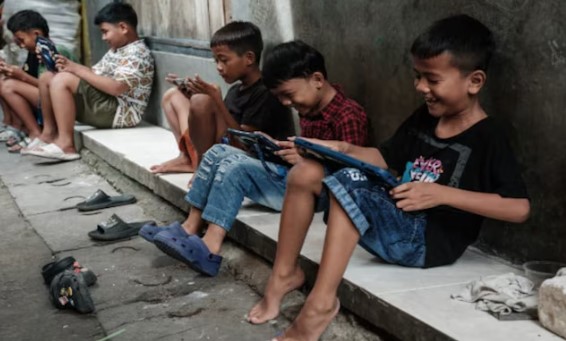
The rules require social media platforms to implement age-verification systems and block users under 16 from creating accounts. They apply to platforms with at least 8 million users, including Facebook, Instagram, TikTok and YouTube.
Malaysia on Monday began enforcing rules barring millions of children younger than 16 from owning social media accounts, joining a global effort to tighten online safety protections for young users.
The rules require social media platforms to implement age-verification systems and block users under 16 from creating accounts. They apply to platforms with at least 8 million users, including Facebook, Instagram, TikTok and YouTube.
Companies that fail to comply could face penalties of up to 10 million ringgit ($2.5 million). But parents whose children manage to bypass the law will not be penalized.
The government said the measures are aimed at protecting children from harmful content, cyberbullying and platform features designed to encourage excessive use.
Other countries including Australia,Brazil and Indonesia have introduced or announced age-based restrictions or requirements for children's access to social media. Countries including Britain, France, Spain, Denmark, Thailand and South Korea are also studying or developing similar approaches.
Malaysia's Communications and Multimedia Commission said the rules are not intended to prevent children from accessing the internet or digital technology. Instead it set expectations for service providers to address online harms and ensure age-appropriate safeguards are in place.
"These measures help strengthen the protection of children in the online environment, while providing added reassurance to parents in navigating increasingly complex digital risks," the regulator said in a statement last month.
Platforms will be required to introduce safety-by-design features, including protections against manipulative design that encourages compulsive use, and take action against underage accounts and harmful content.
Technology companies have yet to detail how they will comply with Malaysia's new requirements.
The regulator said a grace period will be given for platforms to complete implementation of age-verification systems.
Clara Koh, Meta's director of public policy for Southeast Asia, had cautioned in April that Malaysia's blanket under-16 ban could backfire by driving teenagers away from protected apps and into unregulated corners of the internet.
She said Meta has launched "teen accounts" for those under 18 that limits contact, screen time and exposure to inappropriate content.
Malaysia's curbs come as governments face growing pressure to address concerns about social media's impact on children's mental health and online safety.
In March, a US jury ordered Meta and YouTube to pay millions of dollars in damages in a case alleging that platform design features contributed to harm suffered by a young user.
Despite support from many parents, Malaysia's move has also raised concerns over data privacy.
"It is very much following the trend but in a way that is raising alarms due to requiring a government ID for age verification," said Benjamin Loh, social science lecturer at Monash University in Malaysia.
Loh said experiences elsewhere suggest age-based restrictions have yet to prove consistently effective. Without parent penalties, he said families can easily bypass the law by creating accounts for their children.
"This is a major gap that unless regulators are willing to fix, will result in the law having little effect in stopping children from using social media," he added.


comments


Other categories
Recent Comments