


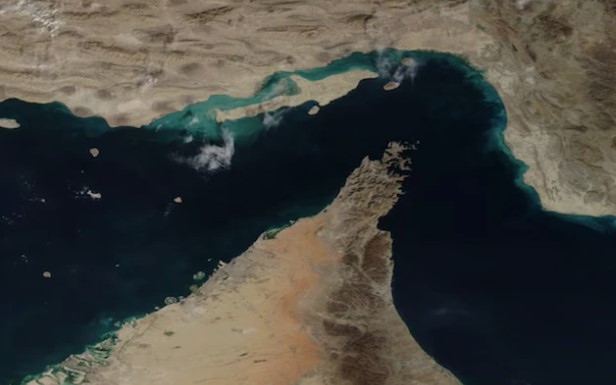
Iran's foreign ministry spokesman, Esmaeil Baghaei, said that Tehran may introduce fees for ships passing through the Strait of Hormuz, with the charges tied to security, environmental protection and other maritime services.
Tehran:
US President Donald Trump has said that the vital oil route through the Strait of Hormuz would be "permanently toll-free" and "completely open" by this week, even as Iran indicated that it intends to charge a 'fee' from commercial tankers for unspecified services during transit.
The so-called service fee-- which was not required before the US and Israel launched a war against Iran-- is likely to add millions in expenses and complications for commercial shipping through the narrow waterway through which a fifth of global oil and liquefied gas passes in peacetime. If Tehran goes ahead with the move, it could also set a dangerous precedent for shipping in international waters worldwide.
What Iran Said
Iran's foreign ministry spokesman, Esmaeil Baghaei, said that Tehran may introduce fees for ships passing through the Strait of Hormuz, with the charges tied to security, environmental protection and other maritime services.
"The Strait of Hormuz is very important for us, and we have adopted certain procedures according to international law in order to protect Iran's national security and the Islamic Republic of Iran," Baghaei told reporters, according to a report by Al Jazeera.
He claimed that Tehran was "not seeking to levy transit tolls; however, fees will be charged in exchange for the services that are provided".
He gave little indication of what services Iran would be providing but added that Tehran requires time to discuss the proposal with other parties involved.
Since the start of the US-Israeli war on Iran, Tehran has disrupted maritime transit through the strait for vessels it says are linked to its war adversaries and their allies. The move is seen as a potential bid to monetise Tehran's newfound grip over the critical waterway.
Can Iran Charge 'Fee' Legally
Legally, there is a difference between a toll and a service fee. A toll is taken as a payment for passage, while a fee is a reward for any actual service rendered, like providing a waste facility at a port during transit.
The United Nations Convention on the Law of the Sea (UNCLOS), which governs international sea law, says that countries bordering straits cannot demand payment simply for permission to pass through.
However, they can impose limited fees on ships for specific services such as piloting, tugging or port services, though these may not be levied more heavily on vessels from any particular countries.
Experts point out that under maritime law, Tehran could charge a fee in certain contexts, but a toll for passage through a waterway that has long been free would not be rendered legal.
"There is no provision in international law for a coastal state charging for passage through a natural waterway, whether you call it a toll or a fee or whatever," James R Holmes, chair of maritime strategy at the Naval War College told New York Times
"We do not pay to go through the Strait of Malacca or the Taiwan Strait, for example."
But the expert noted that in case of artificial waterways, like the Panama Canal or Suez Canal, the states managing the canals do provide services, and money does change hands to pay for those services and for the infrastructure.
"Hormuz is a natural waterway, and as best I can tell, the only service Iran would be charging for is not attacking shipping," Holmes said. As services go, simply not striking, while desirable, "doesn't make the grade", he added.
Why Iran Is Planning Hormuz Fee
The notion of ships paying for the passage through the strait initially came up after the war in Iran started in late February, and the Iranians responded by blocking the regional waters. In March, Tehran said it would start charging ships travelling in the waterway, and by May, the Persian Gulf Strait Authority was established to manage "safe passage permits".
In May, Iran and its neighbour across the strait, Oman, also discussed a ship payment system which would be based on fees for services rendered.
The idea of a potential fee for passage has raised concerns among world leaders that the maritime route may never return to its pre-war status quo. "We defend international law, and we will do everything we can so that there isn't a toll" in the waterway, President Emmanuel Macron of France said.


comments


Other categories
Recent Comments