


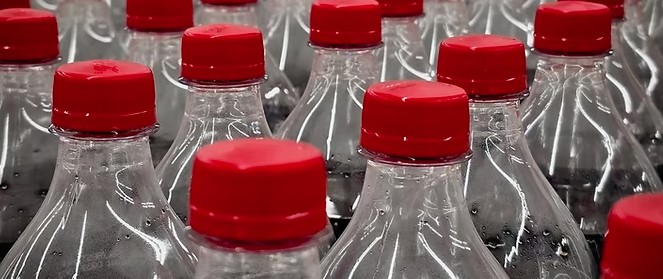
Beverage manufacturers are under pressure to meet evolving consumer demands whilst striving to reduce complexity across production lines. Steve Adams, CEO of Lineview, explores how product diversification is impacting both manufacturing performance and sustainability efforts, and how those companies using real-time data and insights to unlock significant efficiency gains and improve performance will have a competitive edge in an increasingly crowded market.
The beverage industry is moving at breakneck speed, particularly in comparison to the turn of the century. Historically, product development cycles were much slower: manufacturers simply didn’t have the level of technology and automation that is available today to launch new products so quickly, and at such a scale. The beverage market, even just ten years ago, was also less diverse. Coca-Cola, for example, developed its original formula in the late 1800s, with its portfolio gradually expanding over the next century. It may surprise some to know that it wasn’t until 1982 that Diet Coke was introduced - with Vanilla Coke and Coke Zero following in 2002 and 2005, respectively.
Today, product development cycles are faster. Thousands of SKUs enter the market every year – from soft drinks with added vitamins, proteins and minerals to ready-to-drink (RTD) collaborations with alcohol manufacturers. This rapid diversification reflects consumer demand, and it’s the brands that adapt the quickest that will capitalise on new market opportunities. However, pressures to diversify and produce more SKUs are now creating conflicting pressures with demands to operate more efficiently and sustainably.
The indirect costs of diversification
Increasing the variety of products across a production plant means there is no avoiding additional complexity – and this means a higher risk of disruption, delay and waste. The more variants that are introduced, the more factory operations are needed to allow for frequent changeovers, which also incurs more downtime and reduced Overall Equipment Effectiveness (OEE).
There are also major implications here for sustainability. Manufacturers are already working tirelessly to introduce environmentally friendly packaging to meet sustainability goals, both to address consumers' preferences and as part of wider regulatory frameworks.
The ‘lightweighting’ of cans – using thinner materials to reduce aluminium or steel usage – indicates a positive shift in progressing such efforts, but it also presents further manufacturing challenges as production lines and seamers must be adjusted to accommodate the new can weights. What’s more, results from Lineview’s Global Benchmark Report 2025 found that up to one-third of total losses on can lines now result from issues occurring in the area between depalletisers and fillers, largely as a result of the increased fragility of lightweight can variants. These losses are contributing to waste.
The physical flow of a product across a factory floor is another key area of significant waste and drained resources. Even a minor jam can cause hundreds of bottles to be improperly filled and thrown away. Complications can also arise when the flow of production is interrupted – for example, during changeovers. Switching ingredients from one soft drink to another requires hours of sanitisation and results in unnecessary downtime, leading to wasted energy and consumption of resources, particularly without lean manufacturing methods such as SMED (Single-Minute Exchange of Die).
Installing entirely new production lines to account for the growing variety of SKUs would be extremely costly and resource-intensive. Instead, manufacturers are looking at how they can get more from their existing production lines to improve productivity, reduce waste and save costs.
Optimisation empowers operations
The proliferating array of new products, packaging and processes requires agile, future-proof production lines that can adapt to evolving product cycles. To achieve this, manufacturers need a complete view of what is happening across production lines and operations. With data and real-time insights, factory teams can unlock capacity they didn't know existed. For instance, if a business has 50 production lines running at 50% OEE, increasing that OEE by just 10% would create an additional five production lines of capacity, for free. Not only would this deliver a material cost saving to the business, but it would also positively impact sustainability metrics.
Beverage manufacturing is a complex and strategic game of margins – even the smallest issues on high-speed lines can result in significant losses. Equally though, small improvements can deliver significantly. Using data to reduce friction across production can unlock these hidden inefficiencies and help factory teams to identify bottlenecks before they become business-critical problems. This insight into the overall health of production lines is becoming crucial for identifying opportunities for improvement, reducing waste and using resources more responsibly.
Ensuring agile operations is now critical to long-term success for beverage manufacturers managing fluctuating SKUs. Using manufacturing data to improve downtime, accelerate changeovers and increase OEE will ensure existing production lines operate as efficiently as possible and free up capacity in existing lines for more production. Factory teams can use data to test micro-trends and limited-edition flavours in smaller markets without the risk of high overhead. What’s more, data tools can be used to support predictive simulation, enabling different scenarios to be tested before investing time, money and resources into adjusting physical production lines. This, in turn, would accelerate the time to market by potentially cutting months off the R&D-to-shelf timeline, helping businesses adapt to consumer trends faster.
Survival of the efficient
The growing diversity and complexity of beverage production is likely to continue to increase, whilst the current economic backdrop also makes it critical for manufacturers to understand the causes of production inefficiencies, unlocking vital savings through smarter manufacturing processes.
Beverage manufacturers, of course, can’t control external matters, but they can control their own production lines. By unlocking savings through guided use of real-time data and manufacturing insights, businesses can gain a significant competitive advantage. These improvements don’t just happen overnight; they require ongoing collaboration and accountability across all levels of the factory. The good news is that new and emerging technologies can do most of the heavy lifting when it comes to data interpretation. Success will ultimately belong to those who can capture the right data at the right time to drive positive, long-term improvements.


comments


Other categories
Recent Comments