


India and Israel advance defence ties with a new special strategic partnership framework.New Delhi:
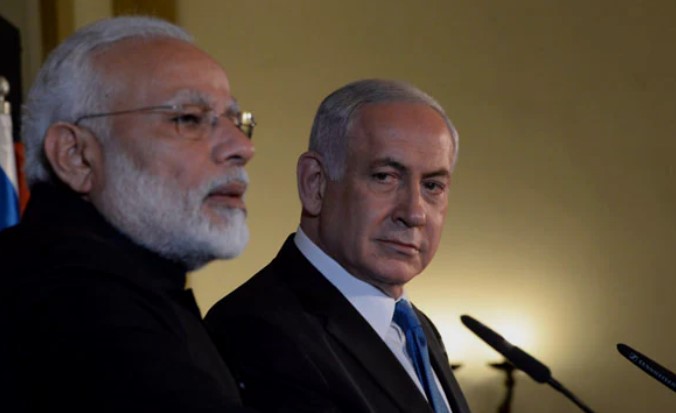
India and Israel are moving decisively into a new phase of their defence and security relationship, shaping the Special Strategic Partnership announced by Prime Ministers Narendra Modi and Benjamin Netanyahu during their last meeting in Jerusalem in February this year, sources have told NDTV. The relationship and fresh talks leading to identification of defining new defence projects are aimed to build joint resilience in the special strategic partnership, sources added.
The partnership, now in its final stages of structuring, is designed to cover co-production of defence systems, joint development of next-generation military technologies, and critically, emergency procurement mechanisms that would activate in times of conflict, threat, or acute national security pressure. The framework essentially codifies what has long been an understated but deeply functional defence relationship between the two countries into something far more structured, resilient, and mutually obligating.
High-Level Signals In New Delhi
The contours of this emerging partnership became clearer this week when Israel's Ministry of Defence Director General, Maj. Gen. (Res.) Amir Baram, arrived in New Delhi leading a high-level defence delegation. Over two days, he held meetings with Defence Minister Rajnath Singh, Defence Secretary Rajesh Kumar Singh, Chief of Defence Staff, and other senior officials, a sweep of India's defence establishment that signals the seriousness of intent on both sides.
India's Ministry of Defence confirmed that discussions with Rajnath Singh focused on "strengthening India-Israel defence cooperation", with Israel "reaffirming its commitment to expanding collaboration under the framework of the India-Israel Special Strategic Partnership". Separately, talks with Defence Secretary Rajesh Kumar Singh zeroed in on "co-development, co-production, and collaboration in next-generation military technologies and advanced defence capabilities".
At a dinner hosted by Israeli Ambassador Reuven Azar, both Baram and India's Director General (Acquisition) A. Anbarasu addressed leaders from India's public and private defence industry. The messaging was deliberate - this is not a government-to-government conversation alone, India's defence industrial base is expected to be a core participant in what comes next.
A Partnership Built On Trust, Not Just Transactions
What distinguishes the India-Israel defence relationship from many of New Delhi's other bilateral security arrangements is the emphasis both sides place on trust, a word that recurred conspicuously throughout the week's engagements.
"What I want to emphasise is the love and respect we receive from Indians," Baram said at the dinner. "The most important aspect of the relationship is the trust between the two countries."
In his formal statement, Baram was more expansive: "India is a key strategic partner of the State of Israel. This important visit reflects the great importance that India and Israel attach to expanding their growing defence and industrial alliance but, no less so, the depth of the bond between our two nations. A bond rooted in shared values, deep cultural appreciation, and mutual trust that goes well beyond mere interests. That is what makes this partnership unique."
From Israel's strategic perspective, the visit is part of a deliberate "eastward" pivot in its defence export and partnership strategy, one aimed at widening Israel's circle of strategic alliances while simultaneously strengthening its own defence industry and military force-building capacity. India, with its scale, growing defence manufacturing ambitions, and geopolitical weight, is central to that calculus.
Six Months In The Making, Finalisation Imminent
Sources indicate that the two governments have spent the last six months in intensive bilateral work, identifying specific joint projects, establishing timelines, and building the operational architecture of the Special Strategic Partnership, which will increase joint resilience. Finalisation of these projects is now expected soon, with the PM Modi-Netanyahu directive providing the political momentum needed to move from preparation to execution.
The "resilience" framing is significant. It signals that both countries are thinking beyond peacetime procurement toward a relationship that holds and delivers under pressure in the event of simultaneous threats, regional conflicts, or supply chain disruptions of the kind that have exposed vulnerabilities in global defence logistics in recent years. For India, which has worked to reduce strategic dependence on single suppliers, a co-production and emergency-access arrangement with a battle-tested defence innovator like Israel is a meaningful capability hedge.
Beyond Defence: Auditing And Institutional Ties Deepen Too
Parallel to the defence engagements, the week also saw the signing of a Memorandum of Understanding between the Office of the State Comptroller and Ombudsman of Israel and the Comptroller and Auditor General of India, covering public sector auditing, capacity building, and technology adoption. It is a quieter milestone, but representative of a relationship that is broadening across institutional domains, not just security ones.
Taken together, the week's engagements paint a picture of an India-Israel relationship that is maturing rapidly, moving from buyer-seller dynamics toward something more genuinely strategic, structurally embedded, and built to endure.


comments


Other categories
Recent Comments