


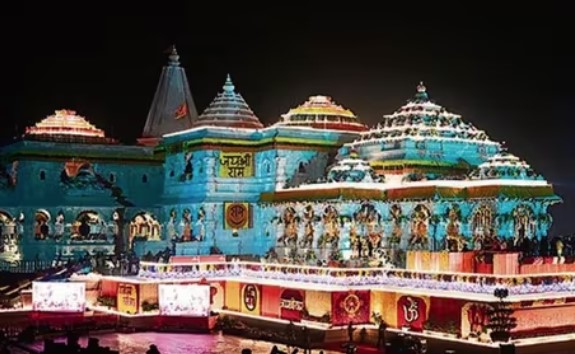
Although CCTV cameras were installed in the Ayodhya Ram Temple counting areas, investigators are examining whether monitoring was effective enough.
The alleged embezzlement of donations at the Ram temple in Ayodhya has shifted the spotlight from individual wrongdoing to larger questions about oversight and accountability at one of India's richest religious institutions. The Shri Ram Janmabhoomi Teerth Kshetra Trust received ₹82.78 crore in donations between April 2025 and February 2026 and manages investments worth around ₹2,100 crore.
As investigators widen their probe, five questions lie at the heart of the controversy.
1. Were adequate checks in place during cash handling?
Investigators say cash collected from around 40 donation boxes passed through several manual stages, including collection, transportation, sorting, counting, bundling and eventual bank deposits.
The SIT is examining whether sufficient safeguards existed at each stage and whether duties were adequately segregated to prevent manipulation or irregularities.
2. Why were standard operating procedures allegedly not followed?
The investigation has raised questions over alleged lapses in established cash-handling protocols.
Among the issues under scrutiny are claims that cash handlers were not required to wear pocketless uniforms and that frisking responsibilities were entrusted to a private security agency instead of police personnel or another government security force.
3. Did surveillance and audit mechanisms fail?
Although CCTV cameras were installed in the counting areas, investigators are examining whether monitoring was effective enough to detect suspicious activity.
The probe has also highlighted concerns over footage being automatically overwritten after 45 days, along with alleged weaknesses in documentation, audit trails and reconciliation between counted cash and bank deposits.
4. Was an SBI warning ignored?
One of the most significant questions emerging from the controversy is whether early warnings were missed.
Bank sources have claimed that the State Bank of India flagged suspected irregularities in the counting process around three months before the case surfaced publicly and recommended changes to the personnel involved. Investigators are now examining whether those recommendations were acted upon and, if not, why.
5. How did safeguards compare with other major temple trusts?
The controversy has inevitably drawn comparisons with systems followed at other major temples in Uttar Pradesh.
Donation counting at Kashi Vishwanath temple in Varanasi takes place under magistrate supervision and continuous CCTV surveillance in the presence of bank officials and independent observers. Similar multi-layered systems operate at the Krishna Janmabhoomi temple in Mathura and the Banke Bihari temple in Vrindavan.
Investigators and former officials say institutions handling large public donations require independent verification, documented audit trails, continuous surveillance and clearly defined accountability to safeguard both public money and public faith.


comments


Other categories
Recent Comments