


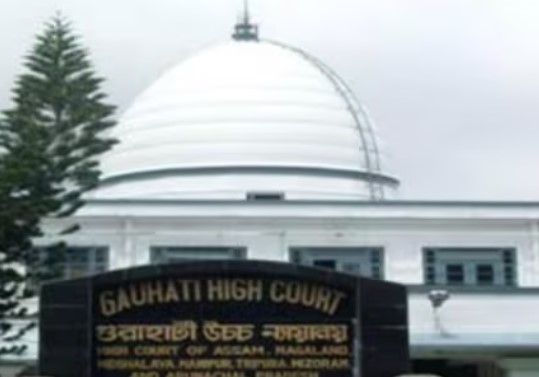
Aminul Hoque did not meet the legal burden of proving his citizenship under Section 9 of the Foreigners Act, the high court said.
A Guwahati resident reportedly failed to prove his nationality despite submitting 15 documents, including National Register of Citizens (NRC) records, electoral rolls, land papers, PAN card and voter ID.
Aminul Hoque did not meet the legal burden of proving his citizenship under Section 9 of the Foreigners Act, which requires a person to prove they are not a foreigner, the Gauhati high court said, as per Bar and Bench.
A division bench of Justice Kalyan Rai Surana and Justice Shamima Jahan dismissed his petition. He had challenged a 2019 Foreigners Tribunal order that declared him a foreigner.
Hoque said he was an Indian citizen by birth and submitted documents to show his family’s presence in Assam before the March 24, 1971 cut-off date, as per the outlet.
These included 1951 NRC extracts, electoral rolls from 1966 onwards, a 1973 land sale deed, PAN card, voter ID and school records. After reviewing the records, the high court said Hoque failed to prove he was a citizen of India.
"Though the petitioner had exhibited 15 (fifteen) documents as exhibits, the same does not appear to help the petitioner to establish that he has been able to discharge his burden as required under Section 9 of the Foreigners Act, 1964 to prove that he is not a foreigner but an Indian Citizen," the Court observed, as per Bar and Bench.
Hoque's father also appeared before the court and identified him as his son. The court held that oral testimony alone, without admissible and relevant documentary evidence supporting the relationship, was not enough to establish the link between the two, ET reported.
PAN, voter ID not proof of citizenship: HC
The high court said that government-issued identity documents alone could not establish a person's citizenship.
"It is well settled that PAN Card and EPIC are not proof of citizenship," the court said.
The Court also rejected Hoque’s reliance on computer-generated extracts of the 1951 NRC, saying they were not proved as required under the law for electronic records.
Court finds gaps in documents
The high court said Hoque failed to show a documented link between himself and the ancestors he claimed.
The man explained that clerical mistakes caused the spelling differences in his parents’ and grandparents’ records. He also said that his family had to move between villages because the Brahmaputra river eroded their land, which is why their names showed up on voter lists in different areas.
The Court noted that it did not care about minor spelling mistakes. It ruled that the man failed to prove that the families listed in the different villages were actually the same family.
The Court also pointed out that the records contained unexplained differences in ages, family details and addresses. The HC said that the man provided no independent documents to back up his claim that the family moved because of river erosion.
Tribunal order upheld
The high court found no reason to interfere with the Foreigners Tribunal’s decision and dismissed Hoque’s petition. This allowed the Tribunal’s 2019 order to stand.
The ruling came days after the ministry of external affairs (MEA) said an Indian passport was only a travel document and not final proof of citizenship.


comments


Other categories
Recent Comments