


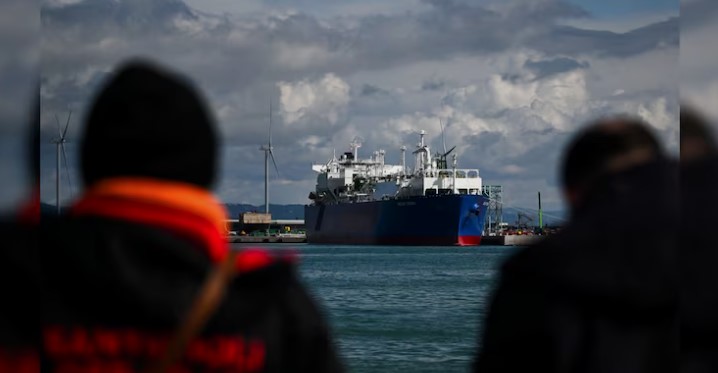
A shadow fleet or a dark fleet is a group of ageing commercial ships that use secret tricks to move oil and goods while avoiding international rules and trade punishments.
Moscow:
With the European Union ban on Russia's liquefied natural gas (LNG) cargoes coming into force next year, Moscow is apparently building its shadow fleet of gas-carrying ships. Russia has added at least eight second-hand LNG tankers along with its first domestically built tankers to its fleet over the past six months, according to a Financial Times report.
Citing data from maritime data company Windward, the British daily reported that with the new additions, the size of the Russian shadow fleet has increased to 25 gas-carrying ships, including two new vessels built at Russia's Zvezda shipyard.
A shadow fleet or a dark fleet is a group of ageing commercial ships that use secret tricks to move oil and goods while avoiding international rules and trade punishments. Nations like Russia and Iran use these ships to sell their oil safely, avoiding Western sanctions.
How This Helps Russia
The growing fleet would help Russia continue shipping its gas even when European restrictions tighten in 2027. Europe has imposed gradual restrictions with the intention of cutting fossil-fuel revenues, helping the Kremlin fund its war in Ukraine.
The oil shadow fleet had precedents in Iran and Venezuela. But no other country had reached that level of technological advancement in gas production by the time it got sanctioned," Irina Mironova, senior researcher at the New Energy Advancement Hub, told FT.
"It's a unique phenomenon," she added.
Inside EU Sanctions
Data show that European nations bought most of the Siberian plant Yamal's output in the first half of 2026. Under the new EU restrictions, these nations will be banned from importing all Russian LNG from next year.
The EU last week also mandated that the sale of LNG tankers to Russian citizens must be notified to Brussels. But after a lot of lobbying from Greece, it stopped short of banning the transport of LNG on EU tankers to third countries.
According to the FT report, some Russian LNG facilities are already hit by sanctions under separate measures, including Novatek's Arctic LNG 2 project.
Russian Shadow Fleet
Russia's oil shadow fleet, per the FT report, numbers over 1,000 ships operating outside Western insurance and paperwork. However, so far, Moscow had been slower to venture into gas carriers, which are far more complex vessels.
Now Russia has 25 gas ships, four of which have reportedly carried volumes from hubs that handle LNG falling under Western sanctions.
These shadow LNG tankers are mainly owned by Russia-linked shell companies in jurisdictions such as Dubai, Hong Kong and Singapore. They use flags of convenience and resort to the same practices as those of the oil shadow fleet, including frequently jamming signals and conducting ship-to-ship transfers to disguise their cargo's origin.


comments


Other categories
Recent Comments