


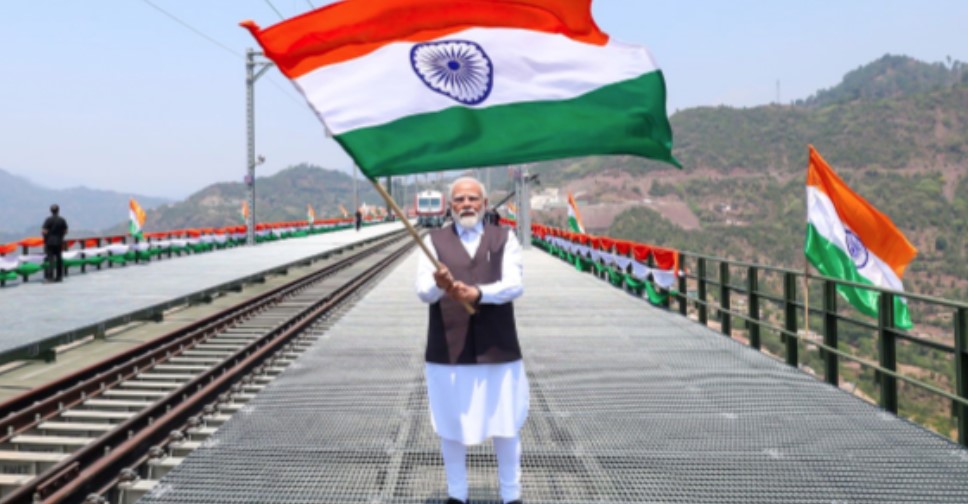
Prime Minister Narendra Modi on Wednesday said Jammu and Kashmir and Ladakh have witnessed a “wide-ranging transformation” since the abrogation of Articles 370 and 35A in August 2019, asserting that the constitutional changes had expanded opportunities in infrastructure, education, healthcare, entrepreneurship and sports while extending constitutional rights to communities that had remained deprived for decades.
Marking the seventh anniversary of the abrogation of Article 370, the Prime Minister said the move had ushered in a “decisive new chapter” in the development journey of the two Union Territories.
In a post on X, PM Modi said the “full application of the Constitution of India” had empowered women and marginalised communities who had been denied their constitutional rights for decades.
“5th August this year assumes even greater significance as this is the year our nation commemorates the 125th birth anniversary of Dr. Syama Prasad Mookerjee. His lifelong commitment to national unity continues to inspire generations. What he envisioned decades ago found historic fulfilment on 5th August 2019,” PM Modi wrote.
“We reaffirm our commitment to the progress of Jammu and Kashmir as well as Ladakh and to ensuring that every citizen has the opportunity to dream big, achieve and contribute to the making of a Viksit Bharat,” he added.
On August 5, 2019, the Centre rendered Article 370 inoperative through a Presidential Order and reorganised the erstwhile state of Jammu and Kashmir into the Union Territories of Jammu and Kashmir and Ladakh.
Defence Minister Rajnath Singh also marked the occasion, describing the constitutional changes as the beginning of a “new era of peace, progress and equal opportunity” for the two Union Territories.
“As we also commemorate the 125th birth anniversary of Dr. Syama Prasad Mookerjee, we salute his unwavering commitment to India’s unity, a vision that found historic fulfilment on 5th August 2019. United in purpose and steadfast in resolve, India remains committed to building a prosperous Jammu & Kashmir, a thriving Ladakh and a Viksit Bharat,” Singh said in a post on X.
Highlighting developments in the region since 2019, the Centre said Srinagar had been recognised as both a UNESCO Creative City and a World Craft City, reflecting international recognition of Kashmir’s rich cultural heritage and traditional craftsmanship.
It also highlighted growth in tourism, stating that more than 50 lakh devotees visited the Vaishno Devi shrine and over four lakh pilgrims undertook the Amarnath Yatra in 2026. The government further cited investments in tourism infrastructure, including the development of attractions around Dal Lake, and initiatives to promote Kashmiri handicrafts and cultural heritage globally.
According to the Centre, several Central laws became applicable in Jammu and Kashmir following the constitutional changes, including legislation relating to the prohibition of child marriage, the Right to Education and land reforms. It also said communities such as Valmikis, Dalits and Gorkhas, who had been residing in the region for decades, now enjoy constitutional rights on a par with other citizens.


comments


Other categories
Recent Comments