


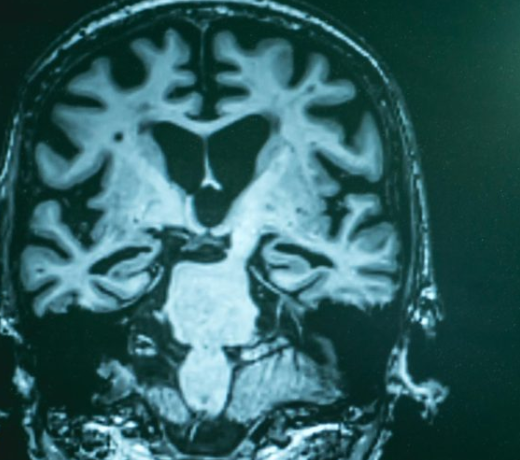
The human genome is not simply packed into brain cells like thread in a box. It folds into an intricate three-dimensional structure that helps determine which genes are active, and new research suggests this organization becomes unusually blurred in Alzheimer’s disease.
Researchers found that large regions of the genome that normally occupy distinct territories were less clearly separated in several types of brain cells from people with Alzheimer’s. The discovery reveals a previously overlooked layer of the disease that extends beyond its familiar amyloid plaques and tau tangles.
The project began when Carnegie Mellon University computational biologist Jian Ma approached Hansruedi Mathys, an assistant professor of neurobiology at the University of Pittsburgh, about examining donated brain tissue with a recently developed single-cell genome mapping technique.
“Of course, I didn’t hesitate—when he proposed we do this study together, I was very excited,” Mathys said. “It was an opportunity to help ensure that people who passed away with Alzheimer’s and had chosen to donate their brains to research could contribute to solving the mystery of this disease and, hopefully, preventing it in the future.”
Beyond Plaques and Tau Tangles
Published in Science, the study connected the physical folding of DNA with gene activity, individual brain cell states, and the organization of surrounding tissue. The researchers accomplished this by combining single-cell measurements, spatial maps of intact brain tissue, and artificial intelligence.
“We know the classic hallmarks of Alzheimer’s disease—accumulation of amyloid-beta plaques and tau tangles—but our results establish higher-order chromatin alterations as a component of the molecular pathology associated with the disease, which currently affects seven million Americans, a number that continues to grow,” said Mathys, co-senior author of the Science paper.
Inside every cell nucleus, DNA wraps around proteins to form chromatin. This packaging is not random. Chromatin bends and loops through three-dimensional space, bringing some stretches of DNA together while keeping others apart. These arrangements influence which genes a cell can use and which remain inactive.
Using a method developed by Ma and Zhijun Duan, a research associate professor in the University of Washington Division of Hematology and Oncology, the team examined this architecture one cell at a time.
When Genome Boundaries Begin to Blur
They discovered that broad active and inactive regions of the genome, known as compartments, had lost some of their normal separation in Alzheimer’s brain cells. The scientists call this breakdown “increased compartment mingling.”
The finding can be compared to boundaries between neighborhoods becoming less distinct. Sections of the genome that normally maintain separate environments began interacting more freely, potentially disrupting the system that controls gene activity.
Disrupted DNA Folding Alters Brain Cells
Several kinds of brain cells displayed the same broad pattern. Interactions between nearby genomic regions became less common, while contacts across greater distances increased. Cells with more compartment mingling also tended to show lower overall gene activity.
Connections between genes and nearby regulatory elements, which function somewhat like genetic control switches, also weakened. At the same time, some interactions across intermediate distances became stronger.
These changes were associated with reduced neuronal and synaptic programs, altered metabolism, and abnormal stress responses. They were also linked to a more stable cell state in microglia, the immune cells that monitor the brain and respond to damage.
“Alzheimer’s disease cannot be understood one layer at a time,” said co-senior author Jian Ma, the Ray and Stephanie Lane Professor of Computational Biology at Carnegie Mellon who led and supervised the study. “The genome’s 3D structure is a fundamental regulatory layer that helps to connect DNA sequence to gene activity. By integrating genome folding, cell state, and tissue context, we can move beyond cataloging disease-associated changes toward understanding how they fit together and which mechanisms to test next.”
Mapping Alzheimer’s One Cell at a Time
The researchers analyzed postmortem samples from the prefrontal cortex, an area near the front of the brain involved in planning, decision-making, attention, and other complex cognitive abilities. The tissue came from people with and without Alzheimer’s who had participated in a long-term dementia study at Rush University’s Alzheimer’s Disease Center and donated their brains after death.
To examine the samples, the team used GAGE-seq, short for genome architecture and gene expression by sequencing. Unlike methods that measure either genome structure or gene activity separately, GAGE-seq captures both in the same individual cell.
The scientists then combined those measurements with spatial transcriptomics, which maps gene activity while preserving each cell’s location in the tissue. This allowed them to see not only what was changing inside individual cells, but also where those cells were positioned within the brain.
AI Connects Genome Structure to Gene Activity
They also developed an artificial intelligence model called Hicformer. The system analyzes DNA sequences, large-scale folding patterns, and local three-dimensional contacts to predict gene activity in different cell types.
The researchers describe Hicformer as a computational “test bed” that can help them explore how particular changes in genome folding might alter cellular behavior. It may also help prioritize the most promising regulatory regions for future laboratory experiments.
Although the same combination of technologies could be applied to other disorders, the team focused on Alzheimer’s partly because its prevalence is rising and the origins of most cases remain uncertain.
“Just a few years ago, when I would give talks about Alzheimer’s, I’d have a slide that said it affected five million people—now it’s seven million,” Mathys said. “It’s increasing so rapidly, and the majority of cases are sporadic, or late onset, for which the cause of the disease is not really known.”
A New Path Toward Alzheimer’s Treatments
Unlike rare inherited forms linked to specific genetic mutations, most Alzheimer’s cases develop later in life without a single identifiable cause. Aging, genetics, cellular stress, inflammation, and environmental influences may all contribute, making it difficult to isolate the earliest events that push brain cells toward disease.
The discovery raises several questions. Researchers now want to determine whether disrupted genome compartments appear before major brain damage, whether they worsen as Alzheimer’s progresses, and why the changes are more pronounced in some people than in others.
They also want to examine people who accumulated Alzheimer’s pathology in the brain but remained cognitively healthy during life. Studying these resilient individuals could reveal whether preserved genome organization helps protect brain cells despite the presence of plaques and tangles.
Future experiments will be needed to manipulate specific folding patterns and test whether correcting them restores normal gene activity. If some structural changes prove to be drivers rather than consequences of the disease, they could point researchers toward an entirely new category of therapeutic targets.
“If we don’t know what is happening in Alzheimer’s disease, we can’t think of ways to prevent it,” Mathys said. “So, if we’re ever going to stop Alzheimer’s, understanding it must be a top priority.”


comments


Other categories
Recent Comments