


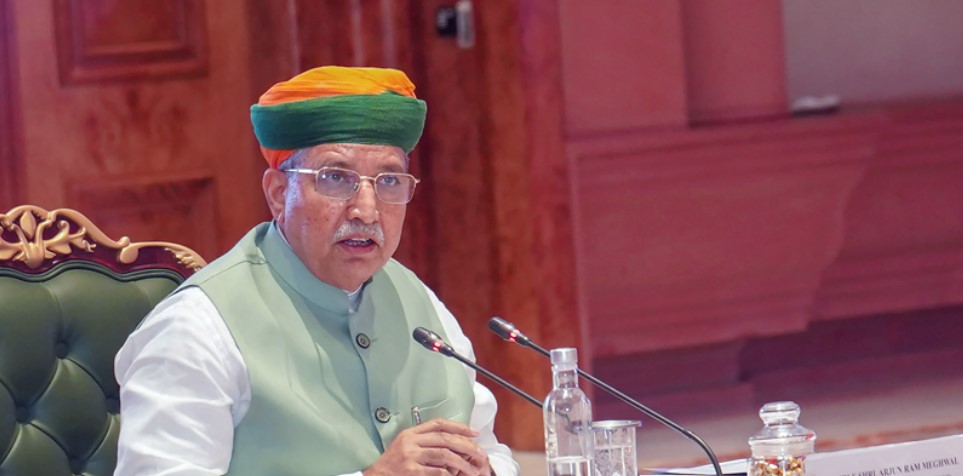
The government is promoting alternative dispute resolution (ADR) mechanisms, including mediation, as a less adversarial and more effective alternative to conventional litigation, Union Minister of State (Independent Charge) for Law and Justice Arjun Ram Meghwal said on Thursday.
In a written reply to a question in the Rajya Sabha, Meghwal said the government was continuously engaging with stakeholders, including High Courts and the National Legal Services Authority (NALSA), to raise awareness about mediation and strengthen the capacity of stakeholders involved in the process.
The government has taken several legislative measures to encourage mediation. Section 12A of the Commercial Courts Act, 2015 provides for mandatory pre-institution mediation and settlement (PIMS) in specified-value commercial disputes before a suit can be instituted, except where urgent relief is contemplated.
The provision requires parties to first exhaust the mandatory mediation process, with the objective of providing an opportunity to settle disputes amicably and reducing the number of cases reaching courts for adjudication. Authorities established under the Legal Services Authorities Act, 1987 are responsible for conducting PIMS under the Commercial Courts Act.
The Mediation Act, 2023 has also established a statutory framework for mediation, with particular emphasis on institutional mediation and the development of a robust mediation ecosystem.
Under Section 31 of the Act, the Mediation Council of India has been established as a national-level body tasked, among other things, with promoting mediation as a preferred mode of dispute resolution and recognising mediation service providers. Section 43 provides for community mediation to resolve disputes likely to affect peace, harmony and tranquillity among residents or families in a locality.
NALSA strengthens mediation infrastructure
NALSA has been taking steps to expand mediation across the country, including strengthening ADR and mediation centres functioning under legal services authorities, empanelling and training mediators, and promoting pre-litigation and community-based dispute resolution.
The Community Mediation initiative is being implemented through State Legal Services Authorities and District Legal Services Authorities.
NALSA also provides grants to the Mediation and Conciliation Project Committee (MCPC) of the Supreme Court, which conducts training programmes for lawyers seeking to become trained mediators.
In collaboration with the International Academy of Mediators, NALSA organised two 15-hour Advanced Commercial Mediation Training Programmes at the Supreme Court in October 2024 and March 2025. The programmes brought together legal professionals, mediators and judges to strengthen their skills in handling complex commercial disputes.
The minister also highlighted a national-level Mediation Conference organised in March 2025 by the Attorney General for India in association with the Department of Legal Affairs and the India International Arbitration Centre at Bharat Mandapam in New Delhi.
Over 1,300 mediation centres operational
As of March 2026, India had 452 ADR Centres and 1,394 Mediation Centres functioning across the country, according to the government.
A total of 4,681 judicial officers, 10,124 lawyers and 753 other mediators have been trained and deployed as mediators.
The minister said these measures are aimed at making dispute resolution more accessible and efficient while reducing the burden on courts and encouraging parties to resolve disputes through consensual and less adversarial mechanisms.


comments


Other categories
Recent Comments