


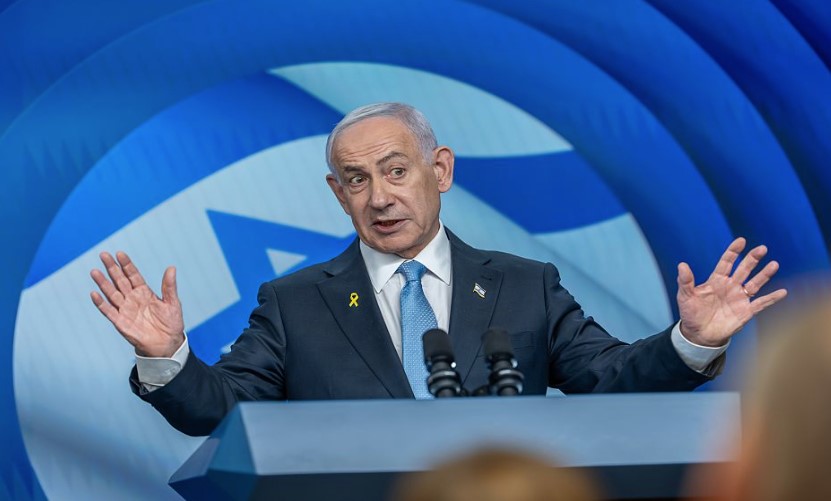
As Israel heads to a crucial parliamentary election on Tuesday, incumbent Prime Minister Benjamin Netanyahu faces a challenge from key candidates including Gadi Eisenkot, Naftali Bennett, Yair Lapid, Avigdor Lieberman and Yair Golan, local media reported.
Netanyahu has positioned himself as the strongest candidate to safeguard Israel’s security and handle its international ties.
His Likud party is focusing on military successes against Hamas, Hezbollah and Iran, while critics argue that the October 7 attack exposed serious security lapses under his leadership, Israeli media outlet i24 News reported.
Former Israel Defense Forces (IDF) chief of staff Gadi Eisenkot has emerged as a prominent challenger to Netanyahu. His newly formed Yashar party combines a security-oriented agenda with pledges to restore public confidence and reinforce democratic institutions.
Furthermore, former prime ministers Naftali Bennett and Yair Lapid have united to build an alliance, the Beyachad party, spanning right-wing and centrist voters. Their platform focuses on national security, integrating ultra-Orthodox men into military service and the workforce, supporting reservists and reforming the constitutional framework.
Led by Avigdor Lieberman, the Yisrael Beiteinu party combines a tough security stance with secular policies.
While the party traditionally drew support from immigrants from the former Soviet Union, it is now reaching out to a broader electorate that demands compulsory military service for all and less religious influence over public affairs.
Additionally, Yair Golan’s Democratic Party opposes annexation, favours a diplomatic resolution to the Israeli-Palestinian conflict and supports cooperation with moderate regional partners, i24 News reported.
Meanwhile, Netanyahu’s opponents are exploring possible post-election arrangements as opinion polls point to a closely contested race, according to a report in The Jerusalem Post.
“Israel’s anti-Netanyahu bloc is preparing for the possibility of forming a minority government after the upcoming elections, despite opposition from Avigdor Liberman and Naftali Bennett, while a broad agreement is emerging among the parties to replace Knesset Speaker Amir Ohana even before a coalition deal is reached,” the report stated.


comments


Other categories
Recent Comments